1. 2 min

    Contending for Peace and Purity

    I spent my first year of college at a second-degree separatist school that was founded by the Bible Presbyterian Church. The men who founded the college were colleagues of Carl MacIntyre, Allan MacRae, J. Gresham Machen, and Bob Jones Jr. These stalwarts of the faith fought for the fundamentals of the faith against the rising tide of liberalism for a good portion of the twentieth century. My professors had been their students, and I am grateful to God to have been one of theirs. They were thoroughgoing fundamentalists—staunchly committed to the fundamentals of the faith, the authority and inerrancy of Scripture, and the pure preaching of the gospel of Jesus Christ. They were willing to separate from anyone who compromised the fundamentals of the faith, and they were willing to separate from anyone else who was unwilling to separate from those who compromised the fundamentals of the faith. As a first-year college student preparing for ministry, I respected these men not only because they contended earnestly for the faith once delivered to the saints, but because they were some of the most godly, loving, and gracious men I have ever known.
    On one occasion, in the midst of wrestling through the implications of second-degree separationism, I went to see one of my professors to gain his counsel about the Southern Baptist church where I served on staff. At one point in our conversation, I asked him, "Sir, at some point don't we simply need to recognize that within the church there are just different strokes for different folks?" I'll never forget the way he looked at me with his penetrating eyes and a warm grin: "Yes, just as long as those strokes are biblical."
    For nearly twenty years, I have seriously considered his words and the principles of separation that he instilled within me. Both then and now, I have found that I am more aligned with the principles of separation and association with J. Gresham Machen than anyone else. Dr. Machen pursued right association for the sake of the unity and peace of the church with as much earnestness as he pursued necessary separation for the sake of the purity of the church and the gospel. For there cannot be true peace and unity in the church without purity. God calls us not only to contend earnestly for the faith (Jude 3) but to eagerly maintain the unity of the Spirit in the bond of peace (Eph. 4:3). Both are necessary, but it takes wisdom from above to do both in a biblical way that glorifies God.
    Like Machen, Francis Schaeffer, who early in his ministry was part of the Bible Presbyterian Church, taught that the church should practice two things simultaneously: orthodoxy of doctrine and orthodoxy of visible community. As we strive for both, God calls us to contend earnestly on our knees in prayer and to stand up and speak the truth in love for the sake of the name of Christ and the one, holy, catholic, and apostolic church

    Burk Parsons
  2. 1 min

    An Interview with R. Albert Mohler Jr.

    Dr. R. Albert Mohler Jr. serves as president of The Southern Baptist Theological Seminary. In addition to his presidential duties, Mohler hosts Thinking in Public, an interview forum about frontline theological and cultural matters; and The Briefing, which seeks to enable Christians to think biblically about current events. He has served as pastor and staff minister of several Southern Baptist churches and came to the presidency of Southern Seminary from service as editor of The Christian Index, the oldest of the state papers serving the Southern Baptist Convention. Dr. Mohler has served in several offices in the SBC, including a term as chairman of the Committee on Resolutions, which is responsible for the denomination’s official statements on moral and doctrinal issues. In 2000, Dr. Mohler served on a panel that made recommendations to the SBC for revisions to the Baptist Faith and Message, the statement of faith most widely held among Southern Baptists. He currently serves as chairman of the Southern Baptist Convention’s Council of Seminary Presidents.
    The April edition of Tabletalk featured an interview with Dr. Mohler. You can read it in Holding the Line: An Interview with R. Albert Mohler Jr..

    Tim Challies
  3. Tabletalk
    Print Article : December 2024

    A Glorious Unity

    I did not grow up reading the Bible, nor do I recall ever seeing a Bible in my home. I vividly remember receiving my first Bible when I was a teenager, but I had trouble reading it because it was the King James Version. I later came to appreciate the beauty of the KJV, but it took some years. When I was fourteen years old, I began to study the Bible on my own. It was the first time in my life that I came to understand the purpose of my life and the purpose of everything.
    Burk Parsons
    Tabletalk
  4. 6 min

    Degrees of Separation

    One of the most difficult challenges to address in the Christian life is our relationships with other Christians. It's like walking a tightrope with heavy weights on each end of our pole. On the one side is the biblical command to unite with professing Christians, while on the other is the biblical demand to separate—at times—from professing Christians.
    "Unite!" and "Divide!" Complicated and challenging, isn't it? Wouldn't it be so much easier if we could just choose one or the other? Some do. They decide to separate from everyone who does not agree with them on everything, producing sinful schism and division in the body of Christ. Others decide there is virtually nothing that justifies separation from anyone and unite in unholy alliance with anyone who says he is a Christian, no matter what he believes.
    But both of these are unbiblical extremes that throw us off balance, tipping us into dangerous and damaging sin. Although we might prefer a simpler life, God calls us to walk this precarious tightrope carrying both weights on the ends of our pole.
    DEFAULT TO UNITY
    Having said that, the balance of Scripture suggests that the heavier weight is on the side of unity rather than division. That makes sense because one of sin's great consequences has been to divide people from God and people from people. Our innate, sinful default is separation. That's why there are so many verses in the Bible that are weighted toward strengthening love and unity between Christians. God calls us to make unity our starting point, our instinct, our default. We look for reasons to trust and unite before reasons to distrust and divide.
    As we do, we will make different decisions about the nature of our relationships with other Christians. And it's not just our relationships with individual Christians to consider. We also have to decide how to relate to individual churches, denominations, or associations of churches (for example, the Presbyterian Church in America, Southern Baptist Convention, and so on), as well as Christian ministries such as Ligonier, The Gospel Coalition, and others.
    CRITERIA FOR SEPARATION
    So, we begin with biblical balance, weighted somewhat toward unity, and then we start coming into contact with Christians, churches, and ministries about which we must make relationship decisions. Before we look at the different kinds of relationships and associations that may result from this, we need some criteria to help us decide which way to go.
    There are four areas to consider when deciding the nature of a relationship with other Christians. The most important area is doctrine. As Christian unity is unity in the truth, we must ask what this Christian or church believes.
    However, even before that, we have to ask, what doctrines are fundamental and nonnegotiable? Do we insist on complete agreement on every single truth before we have any kind of association with any Christian or church? If so, one will end up uniting only with oneself.
    That's why we need a sliding scale of biblical truths and principles that will determine to what degree we

    David Murray
  5. Tabletalk
    Print Article : May 2020

    Overview of the Twentieth Century

    The foundation of social gospel redefinitions of Christianity was the modern historical-critical method of biblical study, which argued that the virgin birth, miracles, and the resurrection were myths used by the biblical writers to express how Jesus had influenced their lives. Critical scholars in the nineteenth century had challenged the reliability of the Gospel accounts, declaring that Jesus was an ordinary human being who became the subject of legend. Theological liberals in Europe and the United States embraced these critical presuppositions because they believed Christianity was actually about human experience and morality, not outdated dogmas incompatible with modern science.
    S. Fortson III
    Tabletalk Magazine
  6. 2 min

    Always Ready Live: October 3, 2020

    How you answer the tough questions makes all the difference in the world. What will you say when your friends ask about your faith? Do you have the confidence to defend the hope you have in Christ?
    On October 3, 2020, Ligonier Ministries and RBC hosted Always Ready, an online livestream for young students. Eric Bancroft, Nathan W. Bingham, Joel Kim, Stephen Nichols, and Burk Parsons helped equip Christians aged 12–18 to share their faith and stand firm for the truth of God’s Word.
    This special online event was streamed live on our blog, as well as on YouTube, Facebook, and Twitter. You can also watch a recording of the event below.
    Watch The Recording
    Is the Bible still relevant? Since God is good, why do we suffer? Is Jesus the only way to salvation? Eric Bancroft, Nathan W. Bingham, Joel Kim, Stephen Nichols, and Burk Parsons will help equip you to better answer these important questions and more. This livestream has been designed for Christian students, but everyone is welcome. Make sure you tell your friends about this online event.
    Our Speakers:
    Rev. Eric Bancroft is pastor of Grace Church in Miami. Previously he served as senior pastor of Castleview Church in Indianapolis and as a fellow at The Mathena Center for Church Revitalization at The Southern Baptist Theological Seminary in Louisville, Ky. Nathan W. Bingham is director of communications for Ligonier Ministries and a graduate of Presbyterian Theological College in Melbourne, Australia. He blogs at NWBingham.com. Rev. Joel Kim is president and assistant professor of New Testament at Westminster Seminary California in Escondido, Calif. He is a teaching elder in the Presbyterian Church in America and has served as a pastor in several churches in Michigan and Southern California. He is coeditor of Always Reformed. Rev. Kim is also a Ph.D. candidate at Calvin Theological Seminary in Grand Rapids, Mich. Dr. Stephen Nichols is president of Reformation Bible College, chief academic officer for Ligonier Ministries, and a Ligonier Ministries teaching fellow. He is author of numerous books, including For Us and for Our Salvation and A Time for Confidence. Dr. Burk Parsons is senior pastor of Saint Andrew’s Chapel in Sanford, Fla., chief publishing officer for Ligonier Ministries, editor of Tabletalk magazine, and a Ligonier teaching fellow. He is editor of Assured by God: Living in the Fullness of God’s Grace.
    Livestream Sessions:
    Why Apologetics? by Nathan W. Bingham Is Christ Really the Only Way? by Stephen Nichols How Can a Loving God Allow Evil? by Burk Parsons Is the Bible Still Relevant? by Joel Kim What Is Truth? by Eric Bancroft Questions & Answers

    Ligonier Updates
  7. 1 min

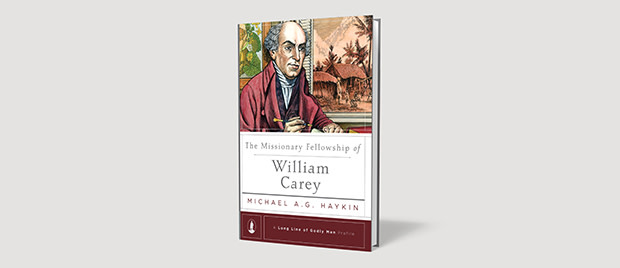
    The Missionary Fellowship of William Carey, New from Michael Haykin and Reformation Trust

    We tend to think of missionaries as solitary heroes and trailblazers, journeying around the world and risking everything to preach the gospel to the lost. William Carey certainly earned that reputation. Known as the “founder of modern missions,” Carey gained celebrity status for his travels to the Indian subcontinent. But that isn’t the full story.
    In The Missionary Fellowship of William Carey, Dr. Michael Haykin explores a lesser-known aspect of Carey’s life: the devoted band of brothers who labored with him in ministry. There’s a timeless nature to their stories we still see today. God uses Christian friendship to advance His kingdom whether at home or on the mission field. God’s design for missions is a community effort.
    Good News
    “There has been a terrible misreading of modern missions, and it’s this: our heroes on the mission field were lone rangers who pulled themselves up by their spiritual bootstraps to take the gospel to the lost. Finally, that caricature has exploded thanks to Michael A.G. Haykin, who demonstrates that the founder of modern missions himself, William Carey, depended not only on God but on close friendships to bring the good news to unreached people.”
    —Dr. Matthew Barrett Associate Professor of Christian Theology at Midwestern Baptist Theological Seminary
    “There has been a terrible misreading of modern missions, and it’s this: our heroes on the mission field were lone rangers who pulled themselves up by their spiritual bootstraps to take the gospel to the lost. Finally, that caricature has exploded thanks to Michael A.G. Haykin, who demonstrates that the founder of modern missions himself, William Carey, depended not only on God but on close friendships to bring the good news to unreached people.”
    —Dr. Albert Mohler President of The Southern Baptist Theological Seminary
    Available now from ReformationTrust.com. 
    Hardcover for $16.00 $12.80 EPUB eBook for $7.00 MOBI eBook for $7.00
    Dr. Michael Haykin is professor of church history at The Southern Baptist Theological Seminary in Louisville, Ky. He is author of several books, including The Christian Lover and Rediscovering the Church Fathers.

    Ligonier Updates
  8. 1 min

    Does the Church Know Her Commission?

    "Have you ever wished you could have a do-over? Have you ever looked back on a situation in which you know that you really botched the job and you just wish you could have another crack at it? That is the way I often feel when I reflect back on some of my less-than-fruitful efforts at evangelism when I was in college. Back then, I was (to say the least) a little wet behind the ears in terms of my theological convictions. I had a basic understanding of Christ’s substitutionary atonement but little appreciation for how His lordship should inform evangelistic appeals. Anyone watching my approach to evangelism would have been well within his rights to label me an antinomian. Unfortunately, I simply did not know any better. So when I had the opportunity to share the gospel with my frat brother Mark, I really botched it."
    In his contribution to February's issue of Tabletalk, Denny Burk, dean of Boyce College and associate professor of New Testament at The Southern Baptist Theological Seminary in Louisville, Kentucky, reflects on some of his early attempts at sharing his faith and asks whether the church really understands her commission.
    You can learn more by reading "Does the Church Know Her Commission?"

    Tim Challies
  9. Miguel Núñez

    Dr. Miguel Núñez is senior pastor of Iglesia Bautista Internacional and president and founder of Wisdom and Integrity Ministries in Santo Domingo, Dominican Republic. He is a council member of The Gospel Coalition and professor of pastoral leadership and director of strategy for Latin America at The Southern Baptist Theological Seminary in Louisville, Ky. He is author of many books, including The Power of the Word in the Transformation of a Nation and A Church according to the Heart of God.
  10. Paperback

    The Disappearance of God

    More faulty information about God swirls around us today than ever before. No wonder so many followers of Christ are unsure of what they really believe in the face of the new spiritual openness attempting to alter unchanging truth.For centuries the church has taught and guarded the core Christian beliefs that make up the essential foundations of the faith. But in our postmodern age, sloppy teaching and outright lies create rampant confusion, and many Christians are free-falling for “feel-good” theology.We need to know the truth to save ourselves from errors that will derail our faith.As biblical scholar, author, and president of The Southern Baptist Theological Seminary, Dr. Albert Mohler, writes, “The entire structure of Christian truth is now under attack.” With wit and wisdom he tackles the most important aspects of these modern issues: Is God changing His mind about sin? Why is hell off limits for many pastors? What’s good or bad about the “dangerous” emergent movement? Have Christians stopped seeing God as God? Is the social justice movement misguided? Could the role of beauty be critical to our theology? Is liberal faith any less destructive than atheism? Are churches pandering to their members to survive? In the age-old battle to preserve the foundations of faith, it's up to a new generation to confront and disarm the contemporary shams and fight for the truth. Dr. Mohler provides the scriptural answers to show you how.“Great biblical truths are meant not only for our intellectual acceptance, but for our spiritual health.”—Dr. Al Mohler

    Albert Mohler
    $15.00$12.00
  11. 6 min

    How We Got Here

    the gift of Warfield to the church.
    The Chicago Statement expands on this basic argument and, quite importantly, draws out the boundary lines of what inerrancy means and what it doesn’t mean through its nineteen articles of affirmation and denial. The Chicago Statement sustained an entire generation in the battle for the Bible. It lent stamina to the theological conservatives in the Southern Baptist Convention as they entered the arena in their seminaries and denominational agencies and structures, to the theological conservatives in Presbyterianism and in other traditions, and to many other evangelical leaders.
    In our day, we are seeing the old Rogers/McKim proposal again. The charge is being made afresh that inerrancy is a rather modern invention and that evangelicals have at their disposal other models for understanding the authority of Scripture. Inerrancy is not necessary, we are being told. We can think about Scripture in a different way. But are these new challenges so new?
    Did Peter Actually Say?
    An intriguing look into the early church’s doctrine of Scripture comes from an exchange between Jerome and Augustine. As Jerome was working through his translation of the Bible, he stumbled over Galatians 2:11–14 and Paul’s confrontation with Peter at Antioch. In an attempt to salvage Peter’s reputation, Jerome concluded that the whole episode was fiction.
    Augustine believed that if you admit error in one place, the entire Bible is open to doubt. He wrote Jerome a series of letters to this effect. In one letter, Augustine wrote: Admit even a single well-meant false-hood into such an exalted authority, and there will not be left a single section of those books which, if appearing to anyone to present difficulties from the point of view of practice or to be hard to believe from the point of view of doctrine, will escape, by the same very baneful principle, from being classified as the deliberate act of an author who was lying.
    Augustine held to “the authority of unadulterated truth.” He further said: An effort must be made to bring to a knowledge of the sacred Scriptures a man who will have such a reverent and truthful opinion of the holy books that he would refuse to find delight in a well-meant falsehood anywhere in them, and would rather pass over what he does not understand than prefer his own intelligence to their truth.
    When someone does prefer his own intelligence, Augustine continued, “he demands credence for himself and attempts to destroy our confidence in the authority of Holy Scripture.” Will we submit ourselves to Scripture, or will we submit Scripture to ourselves?
    This exchange between Augustine and Jerome teaches us many things. It teaches us that Warfield did not invent the doctrine of inerrancy. Warfield contributed to the development of our understanding of biblical inerrancy by offering a helpful way to state the doctrine. But he did not invent it.
    This exchange also teaches us that challenges to the “unadulterated authority” and full veracity of Scripture are not new. In fact, these challenges go back much further than the

    Stephen Nichols
  12. 6 min

    Islam Today

    Whenever I teach on Islam, whether at seminary or in a church, I invariably get asked questions that begin like this: “What would a Muslim think about . . . ?” My standard response is another question: “Which Muslim?”
    Imagine someone asking a parallel question: “What would a Christian think about such-and-such?” Well, what kind of Christian? A conservative Presbyterian or Southern Baptist? A liberal Methodist? A Pentecostal? A Coptic? A member of an Acts 29 church plant in Seattle or a fundamentalist Baptist church in the Deep South? A pastor, a scholar, or a layman? An American, a Norwegian, a Ukrainian, a Syrian, a Rwandan, or a Malaysian? I’m sure you see the point.
    In reality, there’s as much diversity in the Muslim world as there is in the Christian world. Just as we wouldn’t want non-Christians to pigeonhole us with a “one size fits all” view of Christianity, we should acknowledge and respond appropriately to the plurality of perspectives, traditions, and practices that exist among contemporary Muslims. In this article, we’ll survey some major points of diversity found in Islam today and consider the implications for how we engage with Muslims.
    Sunnis and Shiites Undoubtedly, the most prominent division in the Islamic world is that between Sunnis and Shiites (also called Shias), which traces back to bitter internal conflicts in the earliest decades of Islam. Sunnis represent 85–90 percent of Muslims today. The only countries with a Shiite majority are Iran, Iraq, Azerbaijan, and Bahrain. In some respects, the Sunni–Shiite divide in Islam can be compared to the East–West schism in Christianity that separates the Eastern theological tradition (Eastern Orthodoxy) from the Western theological tradition (Protestantism and Roman Catholicism), although the analogy shouldn’t be pressed.
    The central disagreement between Sunnis and Shiites is more political than theological, concerning the legitimate leadership of the umma (the worldwide Muslim community). Shiites insist that the umma should be led by divinely guided imams, each of whom is descended from Ali, the cousin and son-in-law of Muhammad. Although Ali served as the fourth caliph, Shiites believe he should have inherited the mantle of leadership immediately after the death of Muhammad. Shiites are divided into further sects, such as the dominant “Twelvers” of Iran, due to disagreements about how to trace the line of leadership through Ali’s descendants. In contrast, Sunnis believe that in principle any pious Muslim may serve as caliph. Shiites typically see themselves as a persecuted but righteous minority over the course of Islamic history. It’s fair to say that Sunnis and Shiites view each other as unorthodox, if not heretical.
    Sufism Another important point of diversity is represented by Sufism, the mystical tradition within Islam. Put crudely, Sufis are the “charismatics” of Islam. Sufism isn’t a separate branch or sect of Islam alongside Sunni and Shiite Islam, but rather a more experiential approach to piety that can be found among both groups. Sufism originally developed in the medieval period in reaction to the dry legalism of mainstream Islam, which gave little attention to personal

    James Anderson
  13. 6 min

    Opportunity amid Secularism

    Could the rise of the nones—those who claim no religion when asked by pollsters—actually be good for some churches? That’s the attitude of many mainline churches whose ranks have been hardest hit by defections. And they might even have a point.
    Mainline denominations include the Episcopal Church, American Baptist Churches, United Methodist Church, United Church of Christ, Evangelical Lutheran Church in America, Presbyterian Church (U.S.A.), and Christian Church (Disciples of Christ). And they have been unable to stem their membership losses. The trend dates back in some cases to the mainline’s peak in the 1960s. In 1972, these denominations accounted for 28 percent of all Americans. That share had decreased to 12.2 percent by 2014. So, you’d expect these churches to be panicking. But what if they’ve actually succeeded in their mission while failing? What if the mainline lost the pews in order to gain the world?
    Many mainline Protestant churches have long since forsaken preaching Christ and Him crucified for sinners in favor of promoting the latest social causes. And their churches have emptied. Yet their ideas have flourished. Some of those causes, especially their advocacy for abortion and gay rights, have become litmus tests for acceptance into America’s social, academic, and political elite. According to many mainline leaders, the decline in church membership was necessary to purge reactionary elements that resisted this progressive social vision. You can save a lot of time in church catechizing the youth when you know the world will do it for you.
    Evangelicals, meanwhile, have retreated again to society’s margins. You don’t dare declare your opposition to same-sex marriage as a college professor. You wouldn’t think of making a career in the Democratic Party while fighting against abortion. Polite company doesn’t want you to disturb their gatherings with talk about mortality, judgment, and the afterlife. It might seem, then, that evangelicals have lost the long-term battle for America’s Protestant soul. You’d have plenty of evidence in politics and media, at least, to support your concern. But what if both sides have actually achieved their stated goals?
    The nones have defected from the mainline for the world, which now reflects mainline priorities. Evangelicals have not suffered the same membership loss, despite losing standing in the world. According to a 2014 Pew survey, evangelicals lost less than 1 percent of their share of the American population between 2007 and 2014, while mainline Protestants lost 3.4 percent. Losses in the Southern Baptist Convention have been significant but not nearly so severe as in other large denominations. Meanwhile, the evangelical/charismatic Assemblies of God continues to climb in membership. While the mainline won the world, evangelicals won the church.
    There’s a lingering problem, however, for both sides. The world won’t suddenly stop changing. And the world doesn’t need the mainline any longer. It’s unfashionable and on the decline compared to the youthful nones who have discarded dogma. Meanwhile, the world won’t leave evangelicals alone, because many nones resent any lingering influence of organized religion. How evangelicals respond will determine whether they follow the

    Collin Hansen
  14. 3 min

    No Sacrifice Too Great

    walk with them and they with us. This sort of theological education demands a transparency of soul and a knitting together of hearts, as well as the kindling of flame in the mind. In a very real sense, this sort of theological education and mentoring is patterned on the incarnation.
    The great challenge, of course, in this way of incarnational mentoring is that it takes time. For many professors, time seems to be such a scarce commodity. I vividly recall some thirty years ago when I was doing doctoral studies at the University of Toronto, being told by Dr. Richard Longenecker, then my New Testament professor and in some ways a mentor to me, that if I thought I was busy in the doctoral program, just wait until I was teaching. I didn’t believe him, but he was right. Most seminary professors are busy men: teaching in seminary and in the church, as well as seeking to maintain an academic career and be fathers and husbands, sons, and friends. Where will we ever find the time to mentor as Paul did?
    Three years before Basil Manly Jr., one of the four founding faculty of Southern Baptist Theological Seminary, committed himself to the task of being a seminary professor in 1859, he stated that the “cause of theological education is one dearer to me than almost any other and I esteem no sacrifice too great for its promotion.” The sacrifices that especially he, James Petigru Boyce, and John Broadus were called upon to make for this seminary are well-known. Most seminary professors today are not called to walk such a road of sacrifice as those men were, but I am convinced that something of the spirit that animated Manly’s words must grip us.
    Today, more than in the past, we are aware of the very real danger of our ministries crowding out other areas of vital importance — our devotion to wife and children, for example. Thus, while we cannot echo Manly’s sentiments without some qualification, we can nevertheless affirm the key point he was seeking to make. Leadership in the church is so important that we should be prepared to go to great lengths to see future leaders of the church trained. And that training, if it is to be biblical, must involve mentoring à la Paul! This will, of necessity, take time. But, from the point of view of eternity, it will be time well spent.

    Michael Haykin
  15. 4 min

    Drifting into Heresy

    people—but almost unavoidably, pragmatism creeps in to keep the growth curve climbing. The school or ministry begins practices which may not overtly contradict the founding belief, but, though they help growth, they weaken the grip on belief. Soon, the once well-defined distinctives of the organization have degenerated to a more generic, mediocre state.
    We can draw an example of such entropy from the commercial realm. One can eat “Buffalo wings” in Miami or a “Philly cheese steak” in San Diego. But as the popularity of such local specialties demand mass distribution, pragmatic production means the experience in Miami will not have the “local Buffalo flavor.” So also with evangelical belief—in order to translate the belief to the masses, to package it for greater public consumption, certain distinctives invariably seem to disappear. This is nothing less than cultural accommodation. Charles Colson has correctly said, Accommodation always dulls the Gospel’s sharp edge. The church must never confuse technique with truth. Times change; truth doesn’t.
    Second, history is replete with groups that began to tolerate beliefs ever-so-slightly divergent from the past. This done, it is a short step to pluralism—the view that these differing perspectives are mutually valuable and appropriate. Such pluralism springs from a desire for unity and peace. The ecumenical movement believed that compromise on certain distinctives could bring unity. But Luther rightly said, “Peace if possible, but truth at all cost.”
    Finally, there is the tendency to forget. Having first tolerated heterodox belief only eventually to embrace it, the original is soon forgotten. How many students or faculty at Harvard know the founding rules and precepts? Such loss of memory leads not only to violations of historic belief (of which we are all guilty), but to outright repudiation of the covenants and promises of the past. In Israel, those who forgot always were the first to leave. Thus said the psalmist, “Bless the Lord, O my soul, and forget not all His benefits.”
    Swimming against the Tides
    What about you? Perhaps your church is drifting into heresy. Since institutions tend to liberalize, such drift is virtually inevitable. History shows that no church has ever come back once the slide begins—although for the first time we may be seeing such a recovery with the Southern Baptist Convention. Maybe your parachurch ministry or educational institution now denies its founding vision. Do you stay and fight or do you separate?
    Dr. John Gerstner suggests three considerations. First, if your church has not embraced apostasy, you must stay faithful to your membership vows. Second, if the organization has undeniably capitulated the faith, embracing heresy, you must leave (Col. 2:8). Third, and most common, when the lines are blurry (it seems the slide has begun, but the present situation may not qualify as outright heresy), ask yourself this question: “Where can I most effectively serve Jesus Christ?” If unbelief in your institution inhibits your service to the King, and you can better serve Him elsewhere, there is no question as to the course you must take.
    In 1934 a retiring

    Michael Beates
  16. 1 min

    The Dawn of Missionary Societies

    Here’s an excerpt from The Dawn of Missionary Societies, Adriaan C. Neele’s contribution to the May issue of Tabletalk:
    Missionaries of the nineteenth century include well-known men and women, such as William Carey (1761–1834), the British missionary, Particular Baptist minister, translator, and social reformer who spent decades serving in India; Adoniram Judson (1788–1850), the American Congregationalist and later Baptist missionary who served in Burma for thirty-seven years; Hudson Taylor (1832–1905), the British missionary to China for more than fifty years and founder of the China Inland Mission (1865); Lottie Moon (1840–1912), the Southern Baptist missionary to China with the Foreign Mission Board who spent nearly forty years of her life working in China; and Amy Carmichael (1867–1951), Presbyterian evangelical missionary for the Anglican Church Missionary Society to India who opened an orphanage and founded a mission in Dohnavur, serving India for fifty-five years. Their commitment to the gospel, missions work, and the countries they served is moving, and it has motivated many to follow in their footsteps.
    Continue reading The Dawn of Missionary Societies, or begin receiving Tabletalk magazine by signing up for a free 3-month trial.
    For a limited time, the new TabletalkMagazine.com allows everyone to browse and read the growing library of back issues, including this month’s issue.

    Ligonier Updates
  17. Tabletalk
    Print Article : May 2019

    The Dawn of Missionary Societies

    In a 1739 sermon, published posthumously as A History of the Work of Redemption, Jonathan Edwards (1703–58) wrote: It may be hoped that then many of the[m] will be divines, and that excellent books will be published in Africa, in Ethiopia, in Turkey—and not only very learned men, but others that are more ordinary men, shall then be very knowing in religion, Isaiah 32:3–4. In this passage, Edwards clearly demonstrates a global interest in the “propagation of the gospel,” turning his attention to China, the East Indies, and South America as well. Edwards could not have foreseen the fulfillment of these words in the next century—the great century of Protestant missions. In fact, Edwards’ words and works would be carried around the globe to the encouragement of many missionaries, missionary societies, and mission publications endeavors.
    Missionaries of the nineteenth century include well-known men and women, such as William Carey (1761–1834), the British missionary, Particular Baptist minister, translator, and social reformer who spent decades serving in India; Adoniram Judson (1788–1850), the American Congregationalist and later Baptist missionary who served in Burma for thirty-seven years; Hudson Taylor (1832–1905), the British missionary to China for more than fifty years and founder of the China Inland Mission (1865); Lottie Moon (1840–1912), the Southern Baptist missionary to China with the Foreign Mission Board who spent nearly forty years of her life working in China; and Amy Carmichael (1867–1951), Presbyterian evangelical missionary for the Anglican Church Missionary Society to India who opened an orphanage and founded a mission in Dohnavur, serving India for fifty-five years. Their commitment to the gospel, missions work, and the countries they served is moving, and it has motivated many to follow in their footsteps.
    But what about the hundreds of missionaries whose names haven been forgotten? These include men such as the Frenchmen Eugène Casalis (1812–91), Thomas Arbousset (1810–77), and Adolphe Mabille (1836–94) in the service of the Paris Evangelical Missionary Society (PEMS) to Basutoland, today the Kingdom of Lesotho. They worked tiresomely for more than sixty years combined as translators of the first Bible in the Sesotho language, writing the first English-Sesotho Oxford-published dictionary. They were founders of elementary schools, a theological seminary (Morija Theological Seminary), a newspaper (Leselinyana la Basotho, “The Small Light of the Basotho”), a book press, an indigenous church (Lesotho Evangelical Church), and a self-propagating movement, and ultimately they laid the groundwork for a nation, which is still going strong today. There is Mary Slessor (1848–1915), the Scottish Presbyterian missionary to Nigeria who promoted women’s rights and protected native children while spreading the gospel. There is William Whiting Borden (1887–1913), a Yale graduate who studied under J. Gresham Machen at Princeton Theological Seminary. Borden was a wealthy philanthropist and missionary candidate who died in Egypt en route to the Gansu province in China to work among the Muslims. He is interred at the American Cemetery in Cairo, next to Dr. Andrew Watson, who served for more than fifty years at the American Presbyterian mission station in the Middle East, alongside
    Tabletalk Magazine
  18. 1 min

    The Disappearance of the 'Mushy Middle'

    In this brief clip from our 2017 National Conference, Albert Mohler explains the disappearance of the 'mushy middle' in the church.
    Transcript
    "In what ways is the current cultural climate forcing the 'mushy middle' out of the church?"
    Yeah, that's a great question. And it kind of goes back to the seeker sensitive question. We all wanted in on that one because that's where we live. But one of the interesting things to note is that there aren't that many new seeker-sensitive churches because that fit a certain cultural moment when people were saying to unbelievers, "You can gain a bit of social capital by coming to join with us. There's some value added to your life if you come and join with us. If you just come and be with us, we'll add meaning and spirituality to your life in a non-threatening way."
    But in the hardening secularization that we are now experiencing people are going to pay social capital to hang around with anyone believes the gospel of Jesus Christ. They're going to forfeit social capital. They're going to run a risk for being member of our churches. There once was a time when, especially someone—let’s say a Southern town—he wanted to come, and he had his family. And he wanted to be able to raise his children, he wanted to be able to sell life insurance, he had to have credibility. He can add credibility by joining the First Baptist Church, the First Presbyterian Church, that was just what people did in an age of cultural Christianity. Well now, you may fail to become a partner in your law firm because you're a member of a Bible-believing, gospel-teaching church. The 'mushy middle' is disappearing because in a time of hardening—I’m not going to use the word persecution—but in a time of hardening opposition, could well turn into persecution, people are running a risk to hang around with likes of us. And the 'mushy middle' is going to disappear in a hurry because the pressures on both sides are coming real hard.

    Ligonier Updates
  19. Tabletalk
    Print Article : November 2018

    What Does It Mean to Be Reformed?

    I remember visiting home once, years after I had become a Christian and after I had graduated from Reformed Theological Seminary. During my visit, I ran into an old neighbor with whom I had worked while in high school. He told me that he had heard that I had gone to reform school and asked how I was doing now. For those who do not know what a “reform school” is, it is a correctional institution for juvenile delinquents.
    Keith Mathison
    Tabletalk
  20. Tabletalk
    Print Article : October 2018

    Twenty-Five Years Later

    How did you become president of The Southern Baptist Theological Seminary? I was elected president of The Southern Baptist Theological Seminary by a board of trustees. That board is elected by the Southern Baptist Convention and holds the institution in trust as the governing board. Thus, you could really say I was elected by the Southern Baptist Convention, but through a board of trustees. This happened in the midst of a tremendous denominational controversy in which conservatives, advocating for the full trustworthiness and truthfulness of Scripture, were pressing to recover all the institutions of the Southern Baptist Convention. The seminaries were at the center of this controversy, and The Southern Baptist Theological Seminary, as the mother seminary and flagship institution of the Southern Baptist Convention, was at the epicenter. I am very thankful for the stewardship invested in me twenty-five years ago. It has been the great honor of my life.
    What has changed at SBTS over the past twenty-five years? The most important change is theological, and that change came very early. My stewardship was to return SBTS to its founding vision and fundamental convictions. Thankfully, the school was founded as a confessional institution. That confession of faith was intact, ready to be reasserted. Recovering the confessional fidelity of the school and the faith once for all delivered to the saints was the biggest change. It is a transformation for which I am most thankful. At the same time, over last twenty-five years, the world has changed in terms of technology, morality, and education. I am glad to say, however, that the mission of SBTS is the very same as it was in 1859: to train, educate, and prepare ministers of the gospel for more faithful service. Our model of education goes back to Jesus and the disciples, to the Apostles and the early church, to the Reformers and the Puritans.
    What do you think will be the most pressing issue the church faces over the next twenty-five years? Among the many challenges the church will face in the present and coming generations, few will equal the challenge of maintaining a steadfast commitment to biblical Christianity in the midst of an increasingly hostile environment. Cultural hostility takes more than one form and can pose as seduction rather than as coercion. This challenge also includes our responsibility to transmit the Christian faith intact and in full integrity from generation to generation. That was a challenge in ancient Israel. It was a challenge in every age of the church, but it is a particular challenge for Christians today. The generational transfer of the faith becomes a particularly acute challenge when we look, for example, at Western Europe. Recent research indicates that the rate of young Europeans with no religious identity has risen so quickly that biblical Christianity threatens to disappear in any institutional form from throughout much of Europe. Christian parents, congregations, and schools should look at this research with a sense of urgent responsibility. Young Christians today and in the future will need more doctrine,
    Albert Mohler
    Tabletalk

We use several internet technologies to customize your experience with our ministry in order to serve you better. To learn more, view our Privacy Policy.