1. 3 min

    What Is Idolatry?

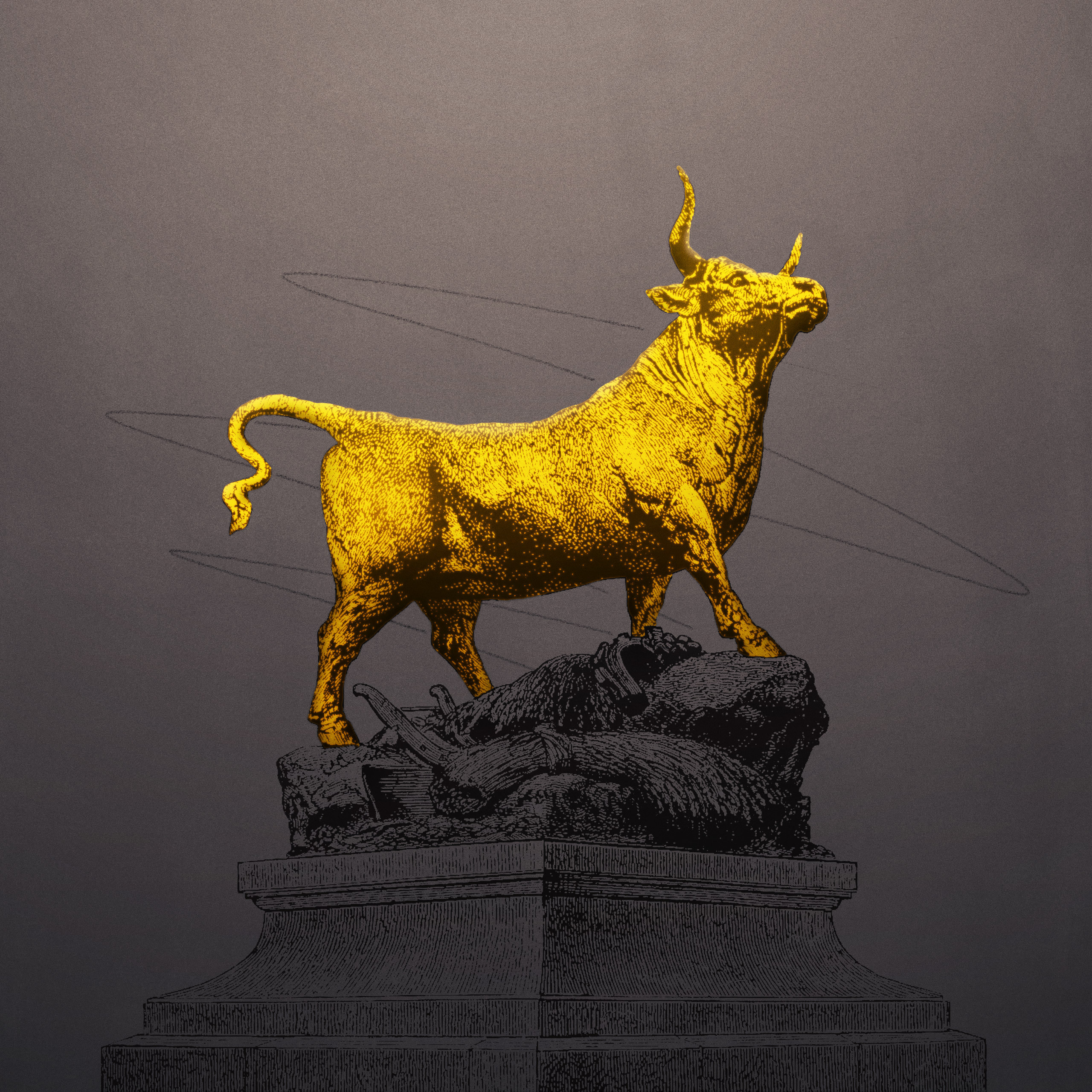
    Exchanging God’s honor, they worshiped the result of their own creation: “Behold your gods, O Israel, who brought you up out of the land of Egypt” (1 Kings 12:28). These famous examples stand as bright neon lights warning us against idolatry. God hates idolatry because He loves His glory. God loves His glory because it is good.
    Many have observed that the first commandment is the foundation for the other nine; to disobey the others is to turn away from the true God to worship an idol. This shows how dangerously varied idolatry can actually be. We may think of it as bowing down to an actual statue, but it can also be desiring something you don’t have that someone else has (see Ex. 20:17).
    When we become Christians, we turn away from idols to serve the living God (1 Thess. 1:9). But this is not the end of the fight. We must continue to turn away from idols (1 Cor. 10:14), working to keep ourselves and others from them (1 John 5:21). 
    The Apostle Paul provides us with a suitable and challenging example. While walking around Athens, waiting for his ministry partners to join him, he looked at the sites. Instead of being impressed by the architecture, he was provoked by the rampant idolatry (Acts 17:16). Paul was so jealous for God’s glory that he was actually irritated that God was not getting the honor that He deserved. As a result, he went out and shared the gospel with everyone around him.
    This love for God’s honor is a suitable safeguard against idolatry. So, think much upon the supreme value of God over all. Dwell upon His unfailing faithfulness, unreserved love, inexhaustible grace, inflexible righteousness, incorruptible goodness, unimpeachable wisdom, and unchanging character. Who is like this? Then think about how, in Jesus Christ, this is the God who knows and loves you. 
    We can pray that God would help us and that we’d resolve to give God the honor He deserves and be quite uncomfortable with anything else.

    Erik Raymond
  2. 6 min

    Addictions and Idolatry

    church of Christ, we fix our eyes on Jesus and insist on knowing Him until we can say with the psalmist, “There is nothing on earth that I desire besides you” (Ps. 73:25), and our friends are blessed and can say, “You turned to God from idols to serve the living and true God” (1 Thess. 1:9).
    The people of God have received the words of God. These words open our eyes so we can see how we still forge idols of all kinds, and these words point us to Jesus, whom we can proclaim to each other, with patience and kindness, and know the God who speaks truth and gives life to the full.

    Edward Welch
  3. 4 min

    Eastern Idolatry

    things are at bottom one. [But] if theism is right, all things are at bottom two, and not one.” In effect, these two worldviews are formally incompatible, irreconcilable. As created beings, we must affirm one, and we cannot affirm both. So what does that say about the massive contemporary interfaith movement? The interfaith movement must adopt one or the other worldview, and it is patently clear that the basis for intercommunion is the search for the god within.
    What is the immediate future of pantheism? It is upbeat. Pollster Daniel Yankelovich said in 1997 that we are witnessing nothing less than the reinvention of spirituality. For leaders in this progressive spirituality movement, pantheism is obvious progress. According to Philip Goldberg: This non-dual religion is likely to ascend [in America] because studies show that human beings move upward along a continuum of spiritual expansiveness . . . society will surely welcome a “non-dogmatic" spirituality, over against the deadly forces of tribalism, ethnocentrism and fundamentalism, outworn dogmas of the past, people who believe "mine is the true religion.”
    The futurist pantheists speak of a “journey toward oneness,” carried along by Global Spirit (a modern form of animism), and believe nothing will stop them from building a new humanity based on oneness, which will include the gender blur of the rising generation, which refuses to be confined to biblical moral distinctions.
    However, there is an iron fist in this velvet, all-tolerant glove—a religious non-negotiable. All the variations of pagan pantheism, which claim to be “non-dogmatic” (whether Hinduism, Gnosticism, mysticism, Interfaith, or the spiritual homosexual agenda), hold to an implacable dogma of pantheistic unity. Pantheists claim that theirs is the true religion. Goldberg explains the good news of pantheism: the mystery that God and the world are not two. As this "mystery" takes over the minds of the contemporary world, we and our believing children and grandchildren will battle for the right to speak the truth in the public square.
    But we take heart, because the idolatry of pantheism in all its subtle complexities is not to be compared with the majestic glory of God, distinct Creator and triumphant Redeemer, who by grace, in the person of Jesus, the Son and only Savior, stooped to save us. This is the gospel of theism to be proclaimed courageously in the promised power and demonstration of the Spirit to a world seduced by the false spirituality of pantheism, just like the world of ancient Rome. May the Lord give strength and boldness to His church for the task ahead, as He did to the church at the beginning of her history. “The gates of hell” are always intimidating, but they can never win.
    : C.S. Lewis, Letters of C.S. Lewis, ed. W.H. Lewis (New York: Harcourt Books, 2003), 479–80. : A Survey of Christian Epistemology, 18–19.

    Peter Jones
  4. 3 min

    The Church and Idolatry

    are not exempt, as too often our affections are poured totally into doctrine with only vague admiration reserved for doctrine’s Author.
    A church will become idolatrous in a heartbeat because it’s already there. So, we cannot set our worship on autopilot. We cannot mistake the appearance of busy religiosity for worship in spirit and truth. We see in Exodus 32:5 that even the worshipers of the golden calf ascribed their worship to the covenant Lord Yahweh.
    The gospel imperative, then, is to return again and again to the gospel indicative. Our first duty is “gospel obedience” (Rom. 10:16; 2 Thess. 1:8; 1 Peter 4:17), which is to stand at attention to Christ upon the gospel’s “tenhut.” Our hearts and minds flow through the rut of idolatry, but the deliberate proclamation of Jesus at every possible turn will force us off our idolatrous course. Martin Luther advises us:
    I must take counsel of the gospel. I must hearken to the gospel, which teacheth me, not what I ought to do, (for that is the proper office of the law), but what Jesus Christ the Son of God hath done for me: to wit, that He suffered and died to deliver me from sin and death. The gospel willeth me to receive this, and to believe it. And this is the truth of the gospel. It is also the principal article of all Christian doctrine, wherein the knowledge of all godliness consisteth. Most necessary it is, therefore, that we should know this article well, teach it unto others, and beat it into their heads continually.
    Tim Keller elaborates: “So Luther says that even after you are converted by the gospel your heart will go back to operating on other principles unless you deliberately, repeatedly set it to gospel-mode.”
    The proclamation of the good news of Jesus and the extolling of His eternal excellencies is always an interruption, always a disruption. It alone will bring the sword of division between where even our religious hearts are set and where they ought to be. For this reason, we cannot go about minding our own business any more. We must mind God’s (Col. 3:1–4).

    Jared Wilson
  5. 3 min

    Young Women, Idolatry & the Powerful Gospel

    gods, not even if she marries Mr. Right. Like us, she will never be satisfied with worshiping and serving the creation because there is a Creator who has already claimed His place as Husband. He not only deserves our worship, He’s the only One grand enough to captivate our hearts and turn our futile idolatry, our chasing after the wind, into joyful worship. Our young women need to be dazzled by the beauty of their Redeemer King. They need to hear His story, His beauty, His love, His excellencies over and over again so that the images they are tempted to worship will pale in comparison.
    Daughters may begin to learn how to identify idols in their own lives as parents and leaders transparently admit and confess their own struggle with idolatry. When a dad confesses that he longs for a promotion at work more than he should (and is angry when he gets passed over again) or when mom admits that she’s addicted to over-exercise so that she can approve of her appearance, a daughter will feel at liberty to admit her slavery to the boys’ opinions. A young woman who knows that she’s not alone in this struggle for singlehearted devotion will more freely admit her own idolatry and will listen more closely when her parents speak out of hearts drenched in humility. And, of course, parents can also help their daughters by praying that the Holy Spirit would make Jesus more beautiful than anyone else.
    How long has it been since your daughter’s heart was soaked in the gospel truth of this great One who gave His life for her that she might be free to worship Him and rest in His welcoming love? The antidote to idolatrous worship isn’t found in rules prohibiting idolatry. Rules don’t dazzle and captivate. They can’t generate worship. They’re not powerful enough to transform. What is? The glory of the Lord as seen in the face of Jesus Christ. “And we all, with unveiled face, beholding the glory of the Lord, are being transformed into the same image from one degree of glory to another” (2 Cor. 3:18; see also 4:6).

    Elyse Fitzpatrick
  6. 4 min

    The History of the Reformation

    “A cesspool of heresies.” This was the judgment rendered by Holy Roman Emperor Charles V on May 26, 1521, shortly after Luther took a stand at the Diet of Worms.
    Earlier, in the bull Exsurge Domine, Pope Leo X described Luther as a wild boar loose in the vineyard of Christ and as a stiff-necked, notorious, damned heretic. On May 4, 1521, Luther was “kidnapped” by friends and whisked off to Wartburg castle, where he was kept secretly hidden, disguised as a knight. There Luther immediately undertook the task of translating the Bible into the vernacular.
    Frequently the Reformation is described as a movement that revolved around two pivotal issues. The so-called “material” cause was the debate over sola fide (“justification by faith alone”). The “formal” cause was the issue of sola Scriptura, that the Bible and the Bible alone has the authority to bind the conscience of the believer. Church tradition was regarded with respect by the Reformers but not as a normative source of revelation. The “protest” of Protestantism went far beyond the issue of justification by faith alone, challenging many dogmas that emerged in Rome, especially during the Middle Ages.
    In a short time, the Reformation swept through Germany but did not stop there. Aided by the translation of the Bible in other nations, the reform spread to the Huguenots in France, to Scotland, England, Switzerland, Hungary, and Holland. Ulrich Zwingli led the Reformation movement in Switzerland, John Knox in Scotland, and John Calvin among the French Protestants.
    In 1534 Calvin delivered a speech calling the church to return to the pure Gospel of the New Testament. His speech was burned, and Calvin fled Paris to Geneva. Disguised as a vinedresser, he escaped the city in a basket. During the next year, some two dozen Protestants were burned alive in France. This provoked Calvin to write his famous Institutes of the Christian Religion, which was addressed to the King of France. His thought contained in the Institutes developed into the dominant theology for the international expansion of the Reformation.
    The first edition of the Institutes was completed in 1536, the same year Calvin was persuaded by Farel to come to Switzerland to build Geneva into a model city of Reformation. In 1538 Farel and Calvin were forced to leave Geneva. He lived and ministered in Strasbourg for three years until he was recalled to Geneva in 1541.
    Calvin’s theology stressed the sovereignty of God in all of life. His chief passion was the reform of worship to a level of purity that would give no hint to or support of the human penchant for idolatry. Geneva attracted leaders from all over Europe who came there to observe the model and be instructed by Calvin himself.
    During this period turbulence spread to England when King Henry VIII resisted the authority of Rome. In 1534 Henry became the Supreme Head of the Anglican Church. He undertook the persecution of evangelicals, which escalated under “Bloody Mary,” causing many to flee to Geneva for refuge.
    The persecutions were suspended

    R.C. Sproul
  7. 7 min

    Calvin’s Defining Passion in the Protestant Reformation

    with which we are uncomfortable, we reconstruct a god who is not holy, a god who is not wrathful, a god who is not just, a god who is not sovereign. Then we say, “Well, our god is a god of love, and he has no place for justice or judgment or any of those things; he is pure love and mercy and grace.” We take the attributes of God that we like and reject the attributes of God that we don’t like, and when we do that, we are just as guilty of idolatry as a person who is worshiping a totem pole.
    One of the great pernicious lies about the character of God is that we all worship the same god. It doesn’t matter what we call him—Allah or Yahweh or Tao or Buddha—we all worship the same thing. This is false. Notions of this kind are forms of man-made religion, and man-made religion is an idolatrous substitute for true worship. We can be religious and be idolaters at the same time if we are withholding the glory that belongs to God and to God alone. Calvin understood this; he understood how deeply rooted in our souls the penchant for idolatry is and how easily we turn aside from true worship to idolatrous worship. As a result, we must strive to be certain that our worship is appropriate and God-glorifying. Does it honor God the way that God seeks to be honored? Jesus tells the woman at the well that “true worshipers will worship the Father in spirit and truth, for the Father is seeking such people to worship him” (John 4:23). We need to take that seriously.
    In 1996, the Cambridge Declaration was drafted in response to certain worrying trends in the evangelical world. Here’s what it says about soli Deo gloria: soli Deo gloria: the erosion of God-centered worship, wherein in the church, biblical authority has been lost, Christ has been displaced, the gospel has been distorted or faith has been perverted, it has always been for one reason: our interest had displaced God’s, and we are doing His work in our way. The loss of God’s centrality in the life of today’s church is common and lamentable. It is this loss that allows us to transform worship into entertainment, gospel preaching into marketing, believing into technique or methodology, being good into feeling good about ourselves and faithfulness into being successful. As a result, God, Christ, and the Bible have come to mean too little to us and to rest too inconsequentially upon us. God does not exist to satisfy human ambitions or cravings, or the appetite for consumption or our own private spiritual interests. We must focus on God in our worship rather than in the satisfaction of our personal needs.
    People sometimes claim that they don’t enjoy going to church because they don’t get anything out of it. It must be understood, however, that the purpose of the Sunday morning gathering of the saints is not personal

    R.C. Sproul
  8. 5 min

    Cultural Revolution

    have an email address—I am still aware that pornography on the Internet is a multibillion dollar industry in our country. My limited use of the Internet boils down to this, each day one of my associates graciously and professionally downloads for me the latest information coming out of Pittsburgh, Pennsylvania, on the developments of the Pittsburgh Steelers football team—one of my passions. What strikes me in reading the print on these articles is that frequently in the margins of these major articles there are seductive pictures of scantily clad young beauties that beckon for further investigation. It’s clear that pornography, even in a sports article, is but a click or two away.
    Given the bombardment of the external stimulation that the young person today receives, it is well advised for the church, even though we are called to maintain the call to holiness and virtue that is ours from Scripture, to have at the same time compassion for people who are overwhelmed by temptation. It would be good for us to remember the encounter of Jesus with the woman caught in adultery, who while treating her with His loving kindness and tender mercy and forgiving her for her sin, nevertheless commanded her to cease from that behavior henceforth, saying, “Go and sin no more.”
    If we examine the biblical ethic with respect to sexual behavior, we see that from the Old Testament through the New Testament, the ethic is virtually monolithic. Take, for example, the technical study of the word pornea as it is used in the Scriptures. In Kittel’s Theological Dictionary of the New Testament, we read, “The New Testament is characterized by an unconditional repudiation of all extramarital and unnatural intercourse” (p. 590). He recognizes that if anything is part of the original message of the New Testament it is this unequivocal judgment with respect to sexual purity and immorality.
    In Paul’s letter to the Romans, Paul expresses the corruption of our humanity that flows out of our base idolatry, and the subsequent judgment of God upon that. We read in Romans 1:24–32: Therefore God gave them up in the lusts of their hearts to impurity, to the dishonoring of their bodies among themselves, because they exchanged the truth about God for a lie and worshiped and served the creature rather than the Creator, who is blessed forever. Amen. For this reason God gave them up to dishonorable passions. For their women exchanged natural relations for those that are contrary to nature; and the men likewise gave up natural relations with women and were consumed with passion for one another, men committing shameless acts with men and receiving in themselves the due penalty for their error. And since they did not see fit to acknowledge God, He gave them up to a debased mind to do what ought not to be done. They were filled with all manner of unrighteousness, evil, covetousness, malice. They are full of envy, murder, strife, deceit, maliciousness. They are gossips, slanderers, haters of God, insolent,

    R.C. Sproul
  9. 3 min

    For the Glory of God

    own hands such as a statue or an icon. But there is also a more sophisticated, intellectual sort of idolatry—the reconstruction of our doctrine of God in such a way as to strip Him of those attributes with which we are uncomfortable. All of us have a propensity to reconstruct a god who is not holy, who is not wrathful, who is not just, who is not sovereign. We find it easy to take the attributes of God we like and reject the ones we don’t. When we do that, we are as guilty of idolatry as a person who is worshiping a graven image.
    Every day in America, we hear one of the great pernicious lies about God, namely, that we all worship the same god. We are told that whatever we call him or it—Allah or Yahweh or Tao or Buddha—it doesn’t matter. We all worship the same thing. To that I reply, “No, we don’t.” The scary part about religion in general is that it underscores man’s guilt before God, but then goes on to create ineffective solutions to this guilt. The impetus for creating alternatives to the religion that God reveals in nature and in Scripture is idolatry. But even if we boldly confess this truth, we must be on guard against idolatry even within the Christian community. Because we are fallen creatures, we can be religious and be idolaters at the same time. All of us can remake God in our own image, downplaying or ignoring those aspects of His character we do not like. If we do that, we are withholding the glory that belongs to God alone.
    The whole goal of our salvation is to bring us to a place where we worship God and we honor Him as God. The great danger is that we make ourselves the center of concern, and we steal the glory of God. In all that we do, the driving passion of the Christian must always be Soli Deo Gloria, to God alone be the glory. And the only way for this passion to be realized is to honor God as God, to understand Him as He has revealed Himself in His Word and not according to the mere opinions of fallen creatures.

    R.C. Sproul
  10. 4 min

    Learning from the Judges

    obey God. Negatively, they promised not to forsake Him for idols.
    And this is significant in light of the promise God made again and again to the patriarchs. When He committed Himself to Jacob, for example, He said, “I will not leave you” (Gen. 28:15). This covenant pledge of God to those who are in a relationship with Him is a key theme of Scripture. The book of Judges attests to that, that even though God chastened His people, He was chastening His children whom He loved. And though they felt forsaken for a season, God did not utterly abandon them.
    However, the record is that the people forsook Him. That’s the big difference between the God of Israel—the God of the covenant—and His people. God does not forsake us, but we are prone to forsake Him. What provoked the forsaking of God during the period of the judges was the Israelites’ great desire to be like their neighbors. God had called them to nonconformity. God had called them to be a holy nation. God had called them to be godly and to flee from idolatry, but that was unpopular in those days. It’s often been unpopular in church history. And without a doubt, it’s unpopular today as well.
    The people of God relived the cycle of relapse, retribution, repentance, and rescue over and over again throughout biblical history. And, dare I say, the church has seen a similar cycle over the past two thousand years as well. But we have a tendency to think such things cannot happen in the life of the church today. We refuse to take note of this recurring pattern of the actions of God, believing that God will not bring calamity upon a people who forsake Him. But the God of Israel is a God who promises both blessing and curse, both prosperity and calamity. We should not be surprised to see trouble for the church when it has been worldly, when it has been unfaithful to the Lord. Sometimes, of course, the church suffers because of its faithfulness, because the forces of darkness respond with hostility against the advance of gospel transformation. At other times, however, the church suffers because of widespread, persistent unfaithfulness. That happened during the era of the judges, and it can happen today as well.
    Nevertheless, we read in the book of Judges that when the Israelites repented, God delivered them. No matter how badly God's covenant people fail, our Lord is quick to rescue His church when she repents. His people forsake Him, but He never forsakes them. Judgment begins at the house of God (1 Peter 4:17), but it is a judgment that is disciplinary, not destructive. It’s designed to move us to repentance and faithfulness. And the era of the judges shows us that the Lord will not fail to rescue and preserve His church when His church repents and cries out to Him.

    R.C. Sproul
  11. 4 min

    The Holy Love of God

    of divine love is a distortion of who God is.
    Of course, the normal problem we face is not that people ignore God’s love; rather, people separate His love from His other attributes. I don’t know how many times I’ve taught on God’s sovereignty, holiness, or justice, only to hear the objection, “But my God is love”—as if God’s love is incompatible with justice, sovereignty, or holiness.
    Our most fundamental inclination as fallen human creatures is to exchange the truth that God reveals about Himself for a lie, and to serve and worship the creature rather than the Creator (Rom. 1:18–32). We commit idolatry every time we substitute a lesser concept for His glory, whether that substitution takes the crass form of stone gods or the more sophisticated form of redefining God’s character to suit our tastes. A god stripped of justice, of holiness, of sovereignty, and the rest is as much an idol as a statue of wood or stone. We must be careful not to substitute for the biblical God a god who is exhausted in his character by the one attribute of love, especially as popular culture defines it.
    As Christians we believe in a God who is simple and not made up of parts. God is not one part sovereign, one part just, one part immutable, one part omniscient, one part eternal, and one part loving. Rather, He is all of His attributes at all times. To understand any single attribute, we must understand it in relation to all His other attributes. The love of God is eternal and sovereign. The love of God is immutable and holy. We treat all of His other attributes in the same way. God’s justice is loving and eternal. His holiness is loving and omniscient. Our concept of the love of God will stay on track only as we understand His love in relationship to His other attributes.
    Whatever else God’s love is, it is holy. His love is therefore characterized by the qualities that define holiness—transcendence and purity. First, God’s love is transcendent. It is set apart and different from everything we experience in creation. Second, God’s love is pure. His love is absolutely flawless, having no selfishness, wickedness, or sin mixed in with it. God’s love is not ordinary or profane. It is a majestic, sacred love that goes far beyond anything creatures can manifest. No shadow of evil covers the brightness of the pure glory of the love of God.
    The love of God is in a class by itself. It transcends our experience. Nevertheless, it is a love that He shares in part with us and expects us to manifest to each other. He grants to His people—insofar as is possible given the Creator-creature distinction—His holy love (Rom. 5:5).

    R.C. Sproul
  12. 4 min

    Our Beautiful God

    sculptors, painters, architects, writers, dramatists, and others—that they feel cut off from the Christian community. They tell me that they are treated as pariahs because their vocation is considered worldly and unworthy of Christian devotion. That's a sad commentary on our state of affairs, particularly when we look at the history of the church and we see that the Christian church has produced some of the greatest giants in music, in art, and in literature. Where else but in Christian history do you find a Milton, a Handel, a Bach, or a Shakespeare—men who have been pioneers of greatness in the arts?
    If you were to go to the Louvre in Paris or to the Rijksmuseum in Amsterdam and peruse the history of art, you would see that it's dominated by a religious orientation, and specifically, a Christian orientation. Ever since the people of God have existed in community, art has been a significant concern. When we go to the Old Testament, for example, we see there that the first people filled with the Holy Ghost were the artisans and craftsman that God selected to prepare the objects for the tabernacle. That's divine inspiration—these artists were inspired by God the Holy Spirit. He inspired them for their craftsmanship of the tabernacle and its furniture, for the metalworking in the tent, and for the making of the gowns and robes for Aaron—which were to be made for glory and for beauty. God was concerned not only to use artists in the building of His sanctuary in the Old Testament, but also to endow those very artists with the power of His Holy Spirit to ensure that what they were doing met with the standards of beauty He set.
    At the same time, we also see in the Old Testament strong prohibitions against the misuse of art. One of the Ten Commandments even prohibits the making of graven images that become part of the practice of idolatry, and so there is a hedge put around the use of art in the Old Testament. Though there were some forms of art that received the blessing of God, there were other forms of art that did not receive the blessing of God.
    One cannot come away from the pages of Scripture with a simplistic conclusion that all art is good art or that all art is bad art, that art is always lawful or that art is always unlawful. What we can come away with is the understanding that God saw art and what it communicates as being important enough to include in His tabernacle—to include the beautiful where people would meet to worship Him. Beauty is important to God because He is beautiful, and so what is beautiful must be of importance to His people as well. Christian artists should be encouraged to create beautiful art, and Christian people should be encouraged to appreciate the beautiful alongside the true and the good, for the Lord Himself is beautiful.

    R.C. Sproul
  13. 4 min

    Which Laws Apply?

    not allowed to do this. Don’t you know that God prohibits this, and that it’s an abomination in His sight and it pollutes the whole land and provokes His judgment?” And what was their immediate response? “That’s the Old Testament.” I said, “Yes, but what has changed to make a practice that God regarded as a capital offense during one economy of redemptive history now something He delights in?” And they didn’t have a whole lot to say because from the New Testament it is evident that God is as against idolatry now as He was then.
    Of course, as we read Scripture, we see that there are some parts of the law that no longer apply to new covenant believers, at least not in the same way that they did to old covenant believers. We make a distinction between moral laws, civil laws, and ceremonial laws such as the dietary laws and physical circumcision. That’s helpful because there’s a certain sense in which practicing some of the laws from the Old Testament as Christians would actually be blasphemy. Paul stresses in Galatians, for example, that if we were to require circumcision, we would be sinning. Now, the distinction between moral, civil, and ceremonial laws is helpful, but for the old covenant Jew, it was somewhat artificial. That’s because it was a matter of the utmost moral consequences whether they kept the ceremonial laws. It was a moral issue for Daniel and his friends not to eat as the Babylonians did (Dan. 1). But the distinction between the moral, civil, and ceremonial laws means that there’s a bedrock body of righteous laws that God gives to His covenant people that have abiding significance and relevance before and after the coming of Christ.
    During the period of Reformed scholasticism in the seventeenth and eighteenth centuries, Reformed theologians said that God legislates to Israel and to the new covenant church on two distinct bases: on the basis of divine natural law and on the basis of divine purpose. In this case, the theologians did not mean the lex naturalis, the law that is revealed in nature and in the conscience. By “natural law,” they meant those laws that are rooted and grounded in God’s own character. For God to abrogate these laws would be to do violence to His own person. For example, if God in the old covenant said, “You shall have no other gods before Me,” but now He says, “It’s OK for you to have other gods and to be involved in idolatry,” God would be doing violence to His own holy character. Statutes legislated on the basis of this natural law will be enforced at all times.
    On the other hand, there is legislation made on the basis of the divine purpose in redemption, such as the dietary laws, that when their purpose is fulfilled, God can abrogate without doing violence to His own character. I think that’s a helpful distinction. It doesn’t answer every question, but it helps us discern

    R.C. Sproul
  14. 4 min

    Building with Conviction

    Wherever people come together to worship God, whether it be on a desert island or in a burgeoning metropolis, whether it be on the plains of Africa or in the cold winter of Siberia, people are concerned to worship Him in terms of the good, the true, and the beautiful. In the book of Exodus, we see the origin of the tabernacle, which was the house of God. This was the house where people came to meet with the living God. In order to prepare that house, the Lord gave meticulous instructions, down to the finest details, as to how the place of meeting was to be constructed. We know that homes or houses come in all shapes and sizes. Some are ornate, others are simple, merely providing the basics that are needed for shelter. There are grass huts, tepees, igloos, castles, and Victorian mansions. The tabernacle had a particular design. It was the dwelling place where God would meet with His people. More chapters are devoted in the Old Testament to the building of the tabernacle than are found in the entire book of Romans. This demonstrates the concern our Lord has for how He is worshiped.
    Since the very beginning, from Cain and Abel to the New Testament model, God has required that true worship be done in Spirit and in truth (John 4:24). God is the source, the fountainhead, and the norm of all that is true. His judgment comes crashing down through the ages on all forms of false worship and idolatry. Idolatry is so pernicious because it distorts and smothers the truth of God. In like manner, God is the source, the fountainhead, and the norm of all that is good. Evil in all of its forms represents a transgression or departure from the good. In the context of worship, goodness is to be part of the focus of attention. Finally, God is the source, the fountainhead, and the norm of all that is beautiful. Just as everything that is true points to God, and everything that is good points to God, so everything that is authentically beautiful also points to the source and fountainhead of that beauty.
    The Old Testament tabernacle was but a shadow of things that were to come. What it foreshadowed was fulfilled in the perfect sacrifice of the incarnate Christ, who was, during His first advent, God “tabernacling” among us. Since the essence of the foreshadowing of the tabernacle was fulfilled in Christ, many have come to the conclusion that we have nothing further to learn from its construction. They say we are not to look at it as a model for New Testament churches, as it has no further significance since Jesus altogether fulfilled its function. Upon taking a second glance however, the question is raised: Are there transferable principles found in the construction of the tabernacle that may be useful for the construction of houses of worship in the New Testament? I believe there are.
    When we look at the instructions

    R.C. Sproul
  15. 4 min

    When to Stop, When to Go, When to Slow Down

    The college I attended was situated in a small western Pennsylvania town in an area heavily populated by one of the largest gatherings of Amish people found in the United States. The Amish are a delightful group totally committed to separation from this world. They go out of their way to avoid any social mixing with the non-Amish, or the “Gentiles,” who are present among them. They are easy to discern, as the clothing they wear is a clearly defined uniform, commonly consisting of blue denim. The men wear beards. Their clothes are never adorned with buttons but are gathered together with hooks and eyes.
    The Amish make their way about the area in horse-drawn buggies. They studiously avoid the use of any modern devices and conveniences, such as cars, tractors, electricity, or running water. An Amish house can easily be identified by the presence of sheets hanging over the windows rather than the more ornate curtains that would indicate the home of somebody more worldly.
    In any case, the entire system of Amish religion is dedicated to a kind of separatism that sees the use of modern conveniences such as electricity and gasoline operated engines as a descent into worldliness. The lifestyle of the Amish is driven in large measure by an ethical commitment that regards such separation as necessary for spiritual development.
    The rest of the Christian community regards the use of buttons, electricity, and gasoline as a matter of moral or ethical indifference. That is, there is no inherent or intrinsic ethical content with respect to the use of the gasoline engine. To be sure, the use of the gasoline engine may be the occasion of sin if we use our cars in an ungodly manner, risking people’s lives and limbs by reckless speeding, for example. Yet the very existence of an automobile and its function in society has no intrinsic, ethical content. We regard automobiles, electricity, or telephones as matters that are adiaphora — things that are morally or ethically indifferent.
    The concept of adiaphora was developed in the New Testament when the apostle Paul had to address emerging ethical concerns in the nascent Christian community. Christians coming out of a background of idolatry were particularly sensitive to issues such as whether it was appropriate to eat meat that had been offered to idols. After using such meat in their godless religious ceremonies, the pagans sold it in the market place. Some early Christians were convinced that such meat was tainted by its very use in pagan religion, so they went to great lengths to avoid it, thinking, according to their scruples for godliness, it was necessary to have no connection with such meat. Paul pointed out that the meat itself was not inherently good or evil, so the eating of meat offered to idols was a matter of ethical indifference. Yet at the same time, the apostle gave significant instructions as to how the Christian community is to relate to those people who develop scruples about certain behaviors that

    R.C. Sproul
  16. 11 min

    The Meaning of God’s Will

    God
    When the Bible speaks of the will of God, it does not always mean the decretive will of God. The decretive will of God cannot be broken, cannot be disobeyed. It will come to pass. On the other hand, there is a will that can be broken: “the preceptive will of God.” It can be disobeyed. Indeed, it is broken and disobeyed every day by each one of us.
    The preceptive will of God is found in His law. The precepts, statutes, and commandments that He delivers to His people make up the preceptive will. They express and reveal to us what is right and proper for us to do. The preceptive will is God’s rule of righteousness for our lives. By this rule we are governed.
    It is the will of God that we sin not. It is the will of God that we have no other gods before Him; that we love our neighbor as we love ourselves; that we refrain from stealing, coveting, and committing adultery. Yet the world is filled with idolatry, hatred, thievery, covetousness, and adultery. Here the will of God is violated. His law is broken.
    One of the great tragedies of contemporary Christendom is the preoccupation of so many Christians with the secret decretive will of God to the exclusion and neglect of the preceptive will. We want to peek behind the veil, to catch a glimpse of our personal future. We seem more concerned with our horoscope than with our obedience, more concerned with what the stars in their courses are doing than with what we are doing.
    With respect to God’s sovereign will, we assume we are passive. With respect to His preceptive will, we know that we are active and therefore responsible and accountable. It is easier to engage in ungodly prying into the secret counsel of God than to apply ourselves to the practice of godliness. We can flee to the safety of the sovereign will and try to pass off our sin to God, laying the burden and responsibility of it on His unchanging will. Such characterizes the spirit of Antichrist, the spirit of lawlessness, or antinomianism, that despises God’s law and ignores His precepts.
    Protestants are particularly vulnerable to this distortion. We seek refuge in our precious doctrine of justification by faith alone, forgetting that the very doctrine is to be a catalyst for the pursuit of righteousness and obedience to the preceptive will of God.
    Biblical Righteousness
    Habakkuk’s famous statement “the just shall live by faith” (Habakkuk 2:4, KJV) is found three times in the New Testament. It has become a slogan of evangelical Protestantism, whose emphasis has been upon the doctrine of justification by faith alone. This slogan, containing a hint of the essence of the Christian life, has its focal point in the biblical concept of righteousness.
    One of Jesus’ most disturbing comments was the statement, “Unless your righteousness exceeds that of the scribes and Pharisees, you will never enter the kingdom of heaven” (Matthew 5:20). It is easy for us

    R.C. Sproul
  17. 4 min

    Covenant Prosecutors

    I don’t remember the exact words. They went something like this: “He was a thundering paradox of a man.” These words served as the opening lines of William Manchester’s classic biography of General Douglas MacArthur. In this work, MacArthur was shown as a multi-faceted man whose essence could not be crystallized by a single attribute. In like manner, the prophets of the Old Testament were men of multi-faceted and multi-dimensioned responsibilities and behavior. Some of the roles carried out by these prophets include the following: First, the prophets of Israel were agents of revelation. They did not say, “In my opinion.” Instead, they introduced their statements or oracles with “Thus saith the Lord.” Though the Old Testament prophets as agents of revelation are popularly conceived as being principally men involved in foretelling, that is, predicting future events, in reality the emphasis of their activity was involved in forthtelling. Forthtelling meant that they were declaring the Word of God to their own time and to their own generations.
    The second dimension of the role of the Old Testament prophet was that of being reformers. We must distinguish here between the work of reformation and the work of revolution. The Old Testament prophets had no desire to root up and cast down or to destroy the cultic structure of the nation. Rather, they called the people to return to orthodoxy, not to abandon their history. They called for a return to the terms of the original covenants that God had made with them, to obedience to the law that God had revealed through Moses, and, most importantly, to the practice of true worship as distinguished from all forms of idolatry and hypocrisy. They spoke boldly against formalism, externalism, and ritualism. But in their critique, they did not repudiate the formal, the external, or the ritual. Rather, it was the ism attached to these concepts that expressed the hypocrisy of Jewish worship during the prophetic era. The rituals, the externals, and the forms had been distorted by false forms of worship.
    Third, the prophet carried out the role of the covenant prosecutor. There were legal ramifications in terms of the relationship between God and His people. The structure of that relationship was the covenant, and all covenants had stipulations associated with them as well as sanctions. There was a penalty for disobedience, as well as a reward for obedience. When Israel violated the terms of her covenant, God sent his prosecuting attorneys to file suit against them, to declare his controversy with the people. We see this in Hosea’s announcement when he called the people of Israel to solemn assembly, saying that the Lord has a controversy with His people. The announcement and pursuit of this controversy by reason of law had the prophets speaking not as priestly defenders of the people, but rather as divine prosecuting attorneys pronouncing God’s judgment and wrath upon them.
    Fourth, the role of the prophet in Israel, individually and corporately, was to serve in a concrete way as the conscience

    R.C. Sproul
  18. 10 min

    Treading Water

    It all depends on whether your man is of the desponding type who can be tempted to despair, or of the wishful-thinking type who can be assured that all is well. The former type is getting rare among the humans. If your patient should happen to belong to it, everything is easy. You have only got to keep him out of the way of experienced Christians (an easy task nowadays), to direct his attention to the appropriate passages in scripture, and then to set him to work on the desperate design of recovering his old feelings by sheer will-power, and the game is ours. If he is of the more hopeful type, your job is to make him acquiesce in the present low temperature of his spirit and gradually become content with it, persuading himself that it is not so low after all. In a week or two you will be making him doubt whether the first days of his Christianity were not, perhaps, a little excessive. Talk to him about “moderation in all things.” If you can once get him to the point of thinking that “religion is all very well up to a point,” you can feel quite happy about his soul. A moderated religion is as good for us as no religion at all—and more amusing.
    Worship
    After Jesus and Peter are safely inside the boat, the wind ceases, and the disciples are amazed. Once again, they are overcome by the knowledge that they are in the presence of One who is holy and powerful. They do the only thing they can do. They worship Him (Matt. 14:33).
    There is nothing fouler to the Jewish mindset than idolatry. It bedeviled the narrative of the Israelites’ entire history. That there is only one God who deserves to be worshiped was a canon emblazoned on their hearts. It was enshrined in the Ten Commandments. And yet these Jewish Christians are worshiping Jesus. And Jesus does not reprimand them. He gladly accepts their worship.
    The disciples recognized again that this man from Nazareth, the son of Mary and Joseph, was also God. For everything else about which the disciples are confused, there is no doubt about the divinity of Jesus in the Gospels on the part of the disciples. The early disciples accepted as fact that Jesus is God. This truth about Jesus is as simple as it is astonishing and beautiful all at the same time. More importantly, without this fact, there is no Christianity. In the boat on the Sea of Galilee that morning was God Himself.
    : William Cowper, “God Moves in a Mysterious Way” (1774). : See Luke 3:21–22; Mark 1:35–36; Luke 5:15–16; Luke 6:12–13; John 6:11; Mark 7:31–37; Matt. 15:36; Luke 9:18; Luke 9:28–29; Luke 10:17–21; Luke 11:1; John 11:41–42; Matt. 19:13–15; Luke 22:17; Luke 22:31–32; John 17:1–26; Matt. 26:36–46; Luke 23:34; Matt. 27:46; Luke 23:46; Luke 24:30. : C.S. Lewis, The Screwtape Letters (1942; repr., New York: HarperCollins, 1996), 45–46.

    Derek Thomas
  19. 3 min

    Why Was the Reformation Necessary?

    be conducted by God’s standards. Our worship shows whether we truly accept God’s Word as our authority and submit to it. Self-created worship is both a form of works-righteousness and an expression of idolatry.
    Next, Calvin turned to what we often think of as the greatest issue of the Reformation, namely, the doctrine of justification: We maintain, that of what description so ever any man’s works may be, he is regarded as righteous before God, simply on the footing of gratuitous mercy; because God, without any respect to works, freely adopts him in Christ, by imputing the righteousness of Christ to him, as if it were his own. This we call the righteousness of faith, viz., when a man, made void and empty of all confidence of works, feels convinced that the only ground of his acceptance with God is a righteousness which is wanting to himself, and is borrowed from Christ. The point on which the world always goes astray, (for this error has prevailed in almost every age,) is in imagining that man, however partially defective he may be, still in some degree merits the favor of God by works.
    These foundational matters that form the soul of the church are supported by the body of the church: the sacraments and the government of the church. The sacraments must be restored to the pure and simple meaning and use given in the Bible. The government of the church must reject all tyranny that binds the consciences of Christians contrary to the Word of God.
    As we look at the church in our day, we may well conclude that reformation is needed—indeed, is necessary—in many of the areas about which Calvin was so concerned. Only the Word and Spirit of God will ultimately reform the church. But we should pray and work faithfully that such reform will come in our time.

    W. Robert Godfrey
  20. 6 min

    Life and Liberty

    “Life” and “Liberty” are terms that have powerful and positive connotative value to us. We are “pro-life” and “pro-liberty.” Such emotionally-laden terms can be definitionally evasive, however, since they stir our passions as well as our reason. As we consider our expectations of the state and our role therein, it is important to be clear about our understanding of such terms.
    “Life” has both a political and a religious definition. In the political arena, “life” is biologically defined; the state defends “life” by protecting people from acts and policies that would injure or take away their lives, biologically considered. The state may wage defensive war, for instance, to defend its citizens’ lives. The state establishes police forces to “protect and serve” our physical well-being, and the state regulates pollutants that could poison the air we breathe. But religiously, “life” has a fuller meaning, such as Paul’s usage when he says that an individual can be dead even while he lives (1 Tim. 5:6). Jesus recognized this distinction between mere biological life and the truest religious life when He cited Moses: “Man shall not live by bread alone, but by every word that comes from the mouth of God” (Matt. 4:4). Bread might very well sustain and promote our biological health, but our spiritual and religious life is sustained by the creative and redemptive word of God. No governmental power can promote or protect “life” in this full religious sense, since such life is the result of the Holy Spirit’s blessing on the means of grace.
    The civil magistrate, whom Paul called in Romans 13 a terror to evil conduct, was the Roman emperor, whose laws and definition of evil were informed neither by the laws of Moses, nor by the teachings of Christ. Evil, in such a context, was and is public evil—crimes against others or their property. It was not “evil” in its full-blown ethical-religious sense, which would include unbelief, idolatry, blasphemy, covetousness, and so on. The Roman emperor showed no concerns for these realities, yet Paul still considered him “God’s servant for your good” (Rom. 13:4). The state defends “life” by protecting people from acts and policies that would take away their lives, biologically considered. In the civil arena, then, we expect the government to promote and protect biological life and to permit (but not necessarily to promote) spiritual life.
    “Liberty,” similarly, has both a political and a religious definition. Religiously speaking, the truest liberty is freedom from sin, and such freedom can even be described, paradoxically, as its own kind of slavery: “For just as you once presented your members as slaves to impurity and to lawlessness leading to more lawlessness, so now present your members as slaves to righteousness leading to sanctification” (Rom. 6:19). Political freedom, on the other hand, is freedom to be fully human, to be fully responsible for oneself, and therefore to follow one’s conscience without interruption by the state, until or unless the exercise of one’s liberty injures the person, liberty, or property of others.
    Political

    W. Robert Godfrey
  21. 5 min

    Semper Reformanda in its Historical Context

    Calvinists often described their vision of the church in three categories: doctrine, worship, and church government. In all three of these areas, the Dutch Reformed Church was thoroughly Calvinistic, similar in most ways to Calvinistic churches throughout the rest of Europe.
    No church's life is ever static, however, and van Lodenstein certainly saw some changes in his lifetime. In doctrine, for example, Reformed theologians were developing a covenant theology that would give great insight into both the structure of the unfolding revelation of the Bible and the work of Christ. Most Reformed Christians have seen this as a real theological advance. Van Lodenstein also saw the increasing use of the organ in public worship in the Reformed churches in his time. He knew the debates as to whether this change was a reformation or a deformation in the worship of the church. Are these the kinds of changes that he had in mind when he wrote about a church reformed and always reforming?
    The answer to this question is no. Van Lodenstein was not thinking about adjustments and improvements to the church's doctrine, worship, and government. These matters of external reform had been absolutely necessary when the Reformers accomplished them in the sixteenth and early seventeenth centuries. But for Calvinists like van Lodenstein, they had been definitively accomplished and settled. He was not contemplating the value of relatively minor changes. He was not a man of later centuries who believed progress and change were necessary and good in and of themselves. He believed the Bible was clear on the foundations of doctrine, worship, and government, and that the Reformed churches had reformed these things correctly. In this sense, reform was a return to the teaching of the Bible. The Reformers had gotten these things right, and they were settled.
    The great concern of ministers like van Lodenstein was not the externals of religion—as absolutely important as they are—but rather the internal side of religion. Van Lodenstein was a Reformed pietist and part of the Dutch Second Reformation. As such, his religious concerns were very similar to those of the English Puritans. They all believed that once the externals of religion had been carefully and faithfully reformed according to the Word of God, the great need was for ministers to lead people in the true religion of the heart. They saw the great danger of their day not as false doctrine or superstition or idolatry, but as formalism. The danger of formalism is that a church member could subscribe to true doctrine, participate in true worship in a biblically regulated church, and yet still not have true faith. As Jesus had warned against the Pharisees of His day, citing the prophet Isaiah, "This people honors me with their lips, but their heart is far from me" (Matt. 15:8).
    The part of religion that always needs reforming is the human heart. It is vital religion and true faith that must be constantly cultivated. Formalism, indifferentism, and conformism must all be vigorously opposed by a faithful ministry.
    Van

    W. Robert Godfrey
  22. 6 min

    God-Centered Prayer

    use John Calvin’s phrase) “idol factories,” constantly succumbing to “I like to think of God as . . .” formulas, all of which are seriously wrong, conceived by a persistent anti-God bias in our mental, moral, and spiritual systems. To avoid idolatry in prayer, we must begin by reminding ourselves of His name—whether that be God’s covenant name “I AM WHO I AM” or Yahweh (that is, self-existent, self-sustaining, self-determining, everywhere present, and always in control); or, as the Lord's Prayer wonderfully encapsulates, “Father” (expressive of the newness of the new covenant and the access and status to which the work of our Redeemer has introduced us); or, “Father, Son, and Holy Spirit” (as Jesus Himself disclosed in the Great Commission of Matthew 28:19). When Jesus commissioned His disciples to baptize in the “name” (singular) of “the Father, Son, and Holy Spirit,” He revealed the impenetrable truth that there is more than one in the one God.
    God-centered prayer pauses to reflect on the nature of God, what He is like—His attributes. That, too, is the focus of an account in which God tells Moses His name. The context (Ex. 34) is the nasty business of the golden calf (man's idol factory at work again). Having cleared up this mess, Moses ascended Sinai again only to be told God’s name once more (Yahweh, Ex. 34:5), but now expanded with an explanation of His nature: “The Lord passed before him and proclaimed, ‘ “The Lord, the Lord, a God merciful and gracious, slow to anger, and abounding in steadfast love and faithfulness, keeping steadfast love for thousands, forgiving iniquity and transgression and sin, but who will by no means clear the guilty, visiting the iniquity of the fathers on the children and the children's children, to the third and the fourth generation.’ ” Grace, mercy, and holiness are attributes that God assigns to Himself—holiness being His moral perfection that responds in retribution to lawlessness and ingratitude. God-centered prayer requires a proper knowledge of God in His Trinitarian glory.
    Praise Praise the Lord! For it is good to sing praises to our God; for it is pleasant, and a song of praise is fitting. (Ps. 147:1)
    God is praiseworthy. Getting that fact under our skin is not as easy as we might think. Self-centered praying (which is a form of idolatry) fails to appreciate that our purpose here on earth is to praise our Creator and Redeemer. Listen to the psalmist as he extols the praiseworthiness of God again and again. The Psalter used to be the basic diet for Christians. Christians sang psalms around the dining room table and in church services on Sunday. Subliminally, the God-centered praise of the book of Psalms became the language of prayer. Since psalm-singing has waned, the rich God-exalting praise that the Psalter represents has waned as well.
    J.I. Packer reminds us of the need to distinguish between praise and thanks, and to ensure that we do both: Prayers of thanks focus to some extent on us.

    Derek Thomas
  23. 6 min

    How to Mortify Sin

    to?” questions.
    1. Learn to admit sin for what it really is. Call a spade a spade—call it “sexual immorality,” not “I’m being tempted a little”; call it “impurity,” not “I’m struggling with my thought life”; call it “evil desire, which is idolatry,” not “I think I need to order my priorities a bit better.” This pattern runs right through this whole section. How powerfully this unmasks self-deceit—and helps us to unmask sin lurking in the hidden corners of our hearts! 2. See sin for what your sin really is in God’s presence. “On account of these the wrath of God is coming” (3:6). The masters of the spiritual life spoke of dragging our lusts (kicking and screaming, though they be) to the cross, to a wrath-bearing Christ. My sin leads to—not lasting pleasure—but holy divine displeasure. See the true nature of your sin in the light of its punishment. Too easily do we think that sin is less serious in Christians than it is in non-believers: “It’s forgiven, isn't it?” Not if we continue in it (1 John 3:9)! Take a heaven’s-eye view of sin and feel the shame of that in which you once walked (Col. 3:7; see also Rom. 6:21).
    3. Recognize the inconsistency of your sin. You put off the “old man,” and have put on the “new man” (3:9–10). You are no longer the “old man.” The identity you had “in Adam” is gone. The old man was “crucified with him [Christ] in order that the body of sin [probably ‘life in the body dominated by sin’] might be brought to nothing, so that we would no longer be enslaved to sin” (Rom. 6:6). New men live new lives. Anything less than this is a contradiction of who I am “in Christ.”
    4. Put sin to death (Col. 3:5). It is as “simple” as that. Refuse it, starve it, and reject it. You cannot “mortify” sin without the pain of the kill. There is no other way!
    But notice that Paul sets this in a very important, broader context. The negative task of putting sin to death will not be accomplished in isolation from the positive call of the gospel to “put on” the Lord Jesus Christ (Rom. 13:14). Paul spells this out in Colossians 3:12–17. Sweeping the house clean simply leaves us open to a further invasion of sin. But when we understand the “glorious exchange” principle of the gospel of grace, then we will begin to make some real advance in holiness. As sinful desires and habits are not only rejected, but exchanged for Christ-like graces (3:12) and actions (3:13); as we are clothed in Christ’s character and His graces are held together by love (v. 14), not only in our private life but also in the church fellowship (vv. 12–16), Christ’s name and glory are manifested and exalted in and among us (3:17).
    These are some of the things my friend and I talked about that memorable evening. We did not have an opportunity later to ask

    Sinclair Ferguson
  24. 3 min

    The Necessity of the Reformation

    be conducted by God’s standards. Our worship shows whether we truly accept God’s Word as our authority and submit to it. Self-created worship is both a form of works-righteousness and an expression of idolatry.
    Next, Calvin turned to what we often think of as the greatest issue of the Reformation, namely, the doctrine of justification: We maintain, that of what description so ever any man’s works may be, he is regarded as righteous before God, simply on the footing of gratuitous mercy; because God, without any respect to works, freely adopts him in Christ, by imputing the righteousness of Christ to him, as if it were his own. This we call the righteousness of faith, viz., when a man, made void and empty of all confidence of works, feels convinced that the only ground of his acceptance with God is a righteousness which is wanting to himself, and is borrowed from Christ. The point on which the world always goes astray, (for this error has prevailed in almost every age,) is in imagining that man, however partially defective he may be, still in some degree merits the favor of God by works.
    These foundational matters that form the soul of the church are supported by the body of the church: the sacraments and the government of the church. The sacraments must be restored to the pure and simple meaning and use given in the Bible. The government of the church must reject all tyranny that binds the consciences of Christians contrary to the Word of God.
    As we look at the church in our day, we may well conclude that reformation is needed—indeed, is necessary—in many of the areas about which Calvin was so concerned. Only the Word and Spirit of God will ultimately reform the church. But we should pray and work faithfully that such reform will come in our time.

    W. Robert Godfrey

We use several internet technologies to customize your experience with our ministry in order to serve you better. To learn more, view our Privacy Policy.