1. Tabletalk
    Print Article : June 2012

    Preach the Gospel, and Since It’s Necessary, Use Words

    There’s a popular saying often repeated by Christians. It has found new life on Facebook and Twitter. Maybe you have even uttered these words, commonly at tributed to Francis of Assisi: “Preach the gospel. Use words if necessary.” I think we can appreciate what many are getting at when they say something like this. As Christians, we should live in such a way that our lives point to the person and work of Jesus. However, good intentions cannot overcome two basic problems with this quote and its supposed origin. One, Francis never said it, and two, the quote is not biblical. Mark Galli has pointed out that there is no record of Francis, a member of a preaching order, uttering anything close to this. In fact, everything we know about the man suggests he would not have agreed with his supposed quote. He was well known for his preaching and often preached up to five times a day. The idea may not have resonated with Francis, but for many today, wordless ministry is a compelling approach. “Words are cheap,” we like to say, and “Actions speak louder than words.” Galli explains that the sentiment complements our culture rather well: “Preach the gospel; use words if necessary” goes hand in hand with a postmodern assumption that words are finally empty of meaning. It subtly denigrates the high value that the prophets, Jesus, and Paul put on preaching. Of course, we want our actions to match our words as much as possible. But the gospel is a message, news about an event and a person upon which the history of the planet turns. And this is the real problem — not from whom the quote originally came, but just how it can give us an incomplete understanding of the gospel and how God saves sinners. Christians are quick to encourage each other to “live out the gospel,” to “be the gospel” to our neighbors, and to even “gospel each other.” The missional impulse here is helpful, yet the gospel isn’t anything the Christian can live out, practice, or become. The Apostle Paul summarized the gospel as the life, death, and resurrection of Jesus Christ, through whom sin is atoned for, sinners are reconciled to God, and the hope of the resurrection awaits all who believe . The gospel is not habit, but history. The gospel is the declaration of something that actually happened. And since the gospel is the saving work of Jesus, it isn’t something we can do, but it is something we must announce. We do live out its implications, but if we are to make the gospel known, we will do so through words. It appears that the emphasis on proclamation is waning even in many churches that identify themselves as evangelical. Yet proclamation is the central task of the church. No, it is not the only task God has given us, but it is central. While the process of making disciples involves more than verbal communication, and obviously
    Ed Stetzer

    Tabletalk
  2. Audio & Video (Download)

    I Will Build My Church

    God’s unchanging plan from all eternity has been to save a people for Himself. Called out of darkness by His Word and Spirit, Christians now take part in this mission to bring the light of the gospel to the nations. Though we live in a hostile world, God’s people can have confidence, knowing that all the powers of hell cannot withstand the triumph of His church. On April 10–12, Ligonier Ministries hosted its 2025 National Conference, I Will Build My Church, in Orlando. Sinclair Ferguson, W. Robert Godfrey, Darrell Harrison, Ken Jones, Joel Kim, Augustus Nicodemus Lopes, Stephen Nichols, Michael Reeves, and Derek Thomas spoke on the promise of Jesus Christ to build His church (Matt. 16:18). They considered how Christians are called to evangelism, missions, discipleship, and worship—all to the glory of God.

    +1
    $36.00$32.40
  3. 18 messages

    I Will Build My Church: 2025 National Conference

    God’s unchanging plan from all eternity has been to save a people for Himself. Called out of darkness by His Word and Spirit, Christians now take part in this mission to bring the light of the gospel to the nations. Though we live in a hostile world, God’s people can have confidence, knowing that all the powers of hell cannot withstand the triumph of His church.
    On April 10–12, Ligonier Ministries hosted its 2025 National Conference, I Will Build My Church, in Orlando. Sinclair Ferguson, W. Robert Godfrey, Darrell Harrison, Ken Jones, Joel Kim, Augustus Nicodemus Lopes, Stephen Nichols, Michael Reeves, and Derek Thomas spoke on the promise of Jesus Christ to build His church (Matt. 16:18). They considered how Christians are called to evangelism, missions, discipleship, and worship—all to the glory of God.

    +2
  4. 1 min

    Announcing Our 2025 National Conference: I Will Build My Church

    God’s unchanging plan from all eternity has been to save a people for Himself. Called out of darkness by His Word and Spirit, Christians now take part in this mission to bring the light of the gospel to the nations. Though we live in a hostile world, God’s people can have confidence, knowing that all the powers of hell cannot withstand the triumph of His church.
    Our 2025 Ligonier National Conference will explore the promise of Jesus Christ to build His church (Matt. 16:18). With this assurance, we’ll consider how Christians are called to evangelism, missions, discipleship, and worship—all to the glory of God. Register today.
    Our speakers in 2025 include Sinclair Ferguson, W. Robert Godfrey, Joel Kim, Augustus Nicodemus Lopes, Stephen Nichols, Burk Parsons, Michael Reeves, and Derek Thomas.
    This conference will be held on April 10–12, 2025, at the Rosen Shingle Creek Hotel in Orlando. Lodging is available for you directly at the venue. Mention Ligonier Ministries when you make your reservation, and consider extending your stay after the conference to enjoy the hotel’s amenities and local attractions.
    Never attended the conference before? Watch messages from our 2024 National Conference in the free Ligonier app, at Ligonier.org, or on our YouTube channel. Additionally, you can still browse the online bookstore for special discounts on trusted biblical resources while supplies last.

    Ligonier Ministries
  5. 1 min

    Ways to Support Ligonier’s Discipleship Mission

    Both on Ligonier’s campus and around the world, prayers, support, and partnership is fueling faithful Great Commission work. For more than four decades our outreach has been sustained by the generous gifts of God’s people, and we remain committed to helping Christians know what they believe, why they believe it, how to live it, and how to share it. Earlier this month we shared the story of God’s grace in one woman’s life, and thanks to the support of people like you we hear hundreds of similar stories every year.
    Innovative New Ways to Give
    Did you know that there are simple ways you can help support our outreach as you do your regular holiday shopping and online activities?
    AmazonSmile — Shop through AmazonSmile and 0.5% of your Amazon purchase price will be donated to the charitable organization of your choice. Learn more. Good Search** — Instead of using Google, use the Goodsearch search engine and donate about a penny for nearly all searches. Learn more. eBay Giving Works** — Choose a portion of your eBay profit to donate to the charity of your choice. Learn more.
    Thank You
    Whatever method is used, we are grateful for everyone who chooses to support the Christian discipleship mission of Ligonier Ministries. Every gift—no matter the size—is needed, appreciated, and put to work immediately. Your gifts empower our worldwide outreach and we thank God for you (Phil. 1:3).

    John Petersen
  6. Paperback

    What Is the Great Commission?

    After His resurrection, Jesus gave His followers a mission: to go to all the nations and make disciples. What does this Great Commission mean? How are disciples made? And does every Christian have a role to play?In this booklet, Dr. R.C. Sproul explores the Great Commission by defining key terms such as the gospel, evangelism, missions, and discipleship. Dr. Sproul explains that disciple-making requires much more than just sharing the gospel, and two thousand years after Jesus' commission, this mission continues.The Crucial Questions booklet series by Dr. R.C. Sproul offers succinct answers to important questions often asked by Christians and thoughtful inquirers.

    R.C. Sproul
    $3.00$2.40
  7. 3 min

    What Is the New Covenant Church?

    A churchless Christian is an oxymoron. As John Calvin famously said, echoing the church father Cyprian, "For those to whom God is Father the church may also be Mother." While the notion of "mother church" may jolt some readers, a moment's reflection will demonstrate the biblical rationale behind it. Under the new covenant established by Christ, the church is critical for the Christian life; without it, exhortations to worship, discipleship, missions, and fellowship would be meaningless. Indeed, an individual would be hard pressed to accommodate the gaggle of "one another" passages that populate the pages of the New Testament apart from participation in a local church.
    Most importantly, the church is central to the work of Christ. The great mystery of the gospel is that the Son of God left His Father in heaven in order to take for Himself an unworthy bride here on earth. He shed His blood for her. The church is not on the margin of God's plan of redemption but at the center of it.
    Given the importance of the church to the Christian life and the work of Christ, we need to think carefully about the question of who comprises the church. One helpful answer is found in the Westminster Larger Catechism, which states, "The visible church is a society made up of all such as in all ages and places of the world do profess the true religion, and of their children" (Q&A 62). At least three aspects of this definition deserve our consideration.
    First, the visible church is the outward manifestation of God's people on earth. The Westminster Divines (pastors and theologians) make a helpful distinction between the visible church as we see it and the invisible church as God sees it. These are not fundamentally two different churches, but one church seen from two vantage points. The visible church is known by those who claim the name of the triune God in baptism, who call themselves Christians by profession of faith, who sit under the preaching of God's Word, who gather around the Lord's Supper, who receive pastoral oversight from godly elders, who engage together in the grand work of the Great Commission, and so on.
    The invisible church, however, is not defined by those who simply profess faith in Christ but by those who actually possess it: those who have been elected, regenerated, justified, adopted, sanctified, and ultimately glorified in Christ. Not everyone who joins the ranks of the visible church belongs to the invisible church. The principle reflects Paul's assertion that not all Israel is true Israel.This side of heaven, the visible church will always consist of wheat and tares.
    Second, the visible church is a universal society. In the New Testament, the most common word for church (Greek ekklesia) is never used to refer to a physical place, like the tabernacle or temple. Rather, the emphasis is on a company of people whom God has called out of the world and into a covenant relationship with Himself.
    The church is not like other social,

    John Tweeddale
  8. The Right Kind of Fear

    What scares you the most? Maybe it’s losing all your money. Or maybe it’s being diagnosed with some fatal disease. Whatever it is, we all struggle with fear. Being the good Father that He is, our God speaks to fear often in His Word. In fact, He tells us not to fear more than one hundred times in the Bible. Let us focus on one of those episodes.
    Two Miracles
    One of the greatest miracles recorded in the Gospels is Jesus’ feeding of the five thousand. When He provided this supernatural repast, it came after a long, hard day of ministry. Afterward, Jesus served His labor-weary disciples by sending them across the lake while He dismissed the crowds (Mark 6:45). Despite being exhausted Himself, He went back to work—the work of prayer (v. 46). Evening came, and the disciples found themselves on the Sea of Galilee in the midst of a violent storm. They had every reason to fear.
    But then, another miracle happened. Jesus came walking on the sea in the middle of the night. Mark records that Jesus “meant to pass by them” (v. 48). Why would Jesus do that? Didn’t He care about their dire plight? Of course He cared. The minute the disciples caught sight of Him, they were terrified, but He told them not to be afraid (v. 50). He climbed into the boat, and at once the whitened crests of the churning, dark sea around them become as smooth as a mirror (v. 51).
    Two Lessons
    This incident teaches us at least two things. First, it teaches us about our fears. We fear the wrong things. Why did Jesus mean to pass them by? Because, as the God-man, He knew the disciples would arrive safely on the other side. He knew no storm would thwart His sovereign plan to continue His mission of discipleship with them. The problem was that the disciples failed to see Jesus for who He was. Therefore, they were afraid with a wrong kind of fear.
    The same kind of wrong fear will grip our lives if we think like the disciples. Fear looks to the waves; faith looks to the God who made the waves. Fear looks at what is right in front of it; faith looks up to the One who knows how to direct every situation in our lives to serve His sovereign ends, which are always good.
    Second, we learn here that there is a right kind of fear. It is the fear of awe and adoration. Once Jesus was in the boat, the disciples were afraid, but they began to learn a new kind of fear, a sweet fear. It is the fear we must all learn: the fear of the Lord. Fear of the waves makes us anxious and depressed. Fear of the Lord of the waves leads to worship and perseverance in our most difficult trials. Are we more afraid of the storm, or have we learned the only kind of fear that can silence all other fears?

    mark 6:45–51
  9. Tabletalk
    Print Article : November 2023

    Globalization and Shifting World Demographics

    “How’s it going?” “What’s going on?” My oldest daughter and I have shared a few endearing and reflective moments regarding those questions. To the former, she likes to respond, “Good.” To the latter, “Not much.” Well, as you might expect, I don’t let her off the hook that easily. I have a plan for her. My fatherly objective goes beyond getting a response. I want to love her well by knowing her better and equipping her to know herself better. I want her to be a better observer. Thinking critically and biblically about our lives and the world around us provides helpful insights about ourselves and those whom Christ has called us to disciple and evangelize. Observation and analysis can be great tools for the Great Commission.
    J.D. Bridges
    Tabletalk Magazine
  10. 3 min

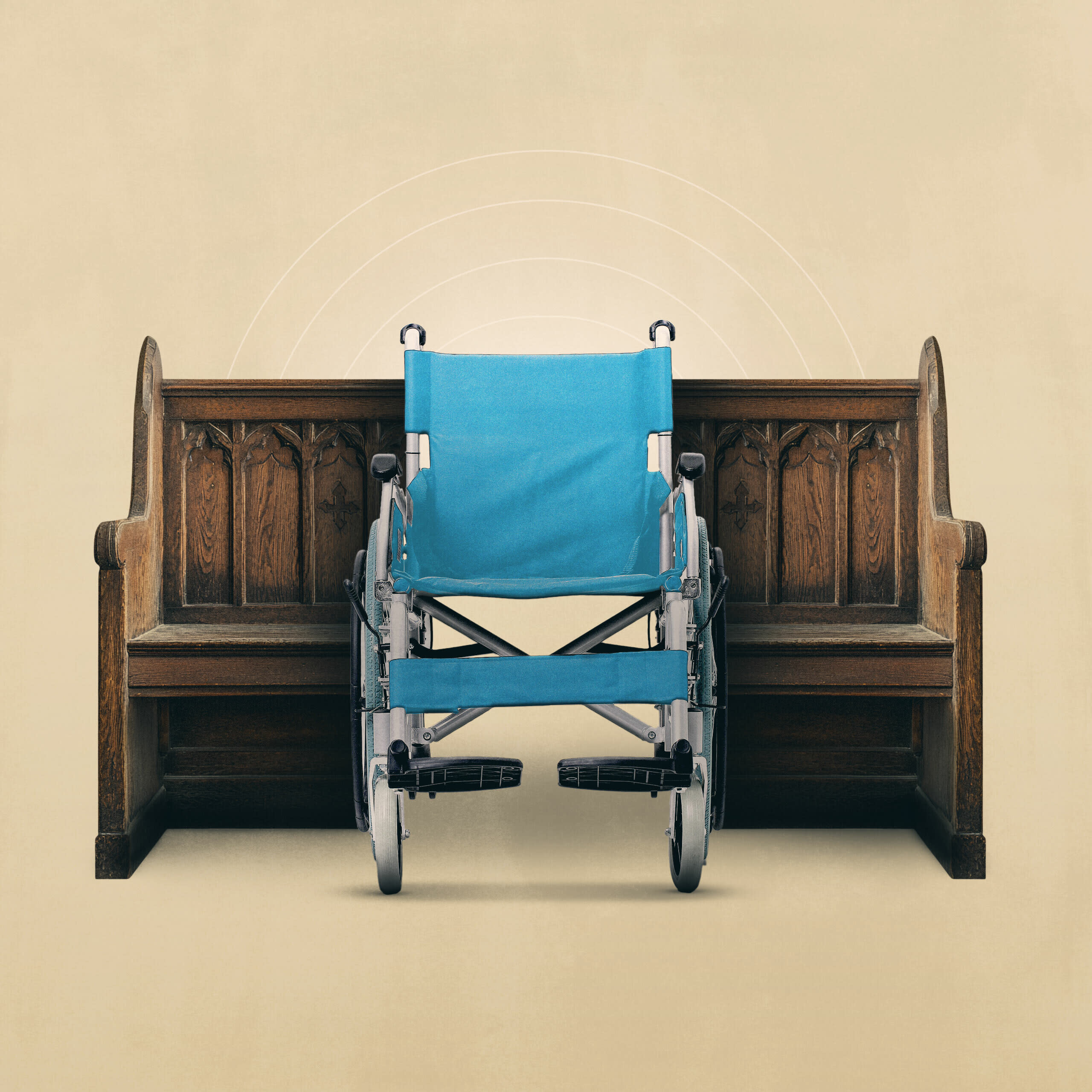
    How Can the Church Care for Its Disabled Members?

    Within a few weeks of being called as the children’s ministry director to my current church, an elder and his wife requested a meeting. They began with this loaded question: “Are you here to minister to all the children in our church, or just most of them?” After giving the right answer (all of them, of course!), they proceeded to ask me how I planned to care for the five children and their families touched by disability who were members of our church. These challenging questions convicted my heart and rocked my ministry world, setting the stage for an eventual thriving disability ministry in our church.
    The question of how to care for individuals and families touched by disabilities in the church is first answered by recognizing a responsibility to care for all members of the church. Disability ministry is not optional, even if there may not be many people with disabilities in your church. It is not a ministry that we focus on after the “more important” ministries to children, youth, etc. Virtually every local church has someone in their midst impacted by disability, whether clearly visible or more invisible. And there are many more people in the community who long to be embraced by the church as well.
    In 1 Corinthians 12, the Apostle Paul describes the church as one body of Christ made up of many members. After describing how all members are both different and necessary, he writes: “The parts of the body that seem to be weaker are indispensable . . . that there may be no division in the body, but that the members may have the same care for one another” (1 Cor. 12:22, 25). Applying these truths to people with disabilities, we are called not only to care well for them but also to recognize that they are indispensable to the body of Christ.
    The church is not only described in Scripture as the body of Christ but also as the family of God. So, while we are called to care for people with disabilities as a part of the body, we must do so from a family heart. As brothers and sisters in Christ, we share a family bond and a love for one another in Christ. With these two pictures of the church in our minds, here are five practical implications for how we care for individuals and families touched by disability:
    Inclusion
    As a church family, we should want all people to be included. Various disabilities make it challenging to become involved and be a functioning part of the body. We must look at each ministry area of the church, from worship to discipleship to missions, etc., and ask how we can ensure inclusion for all our members. We must do everything possible to enable people with disabilities not just to be included, but to fully belong (Eph. 2:19).
    Accessibility
    One of the more obvious ways we care for people with disabilities is by making our buildings accessible. How can all people worship together and

    John Kwasny
  11. 4 min

    We’re Called to Make Disciples, not Simply Converts

    to go to all nations, we are to go into all the world with His agenda, not our own. The Great Commission calls us to flood this world with knowledgeable, articulate Christians who worship God and follow Jesus Christ passionately. Our mission at Ligonier is discipleship in the biblical sense. By God’s grace, we want to help the church raise up a generation of people who are dedicated in heart and soul to the Master and His authority. We want to call people to obedience and to following Christ in their daily lives.

    R.C. Sproul
  12. 1 min

    4 Disturbing Trends in the Contemporary Church

    According to several studies, American evangelicals generally do not know what they believe and why they believe it. Consequently, most share with the wider culture a confidence in human goodness and a weak view of the need for God's saving grace in Jesus Christ. According to these reports, most evangelicals believe that we are saved by being good and that there are many ways of salvation apart from explicit faith in Jesus Christ.
    Here are a few of the disturbing trends that need to be checked and reformed in contemporary church life:
    1. We are all too confident in our own words
    We are all too confident in our own words, so that churches become echo chambers for the latest trends in pop psychology, marketing, politics, entertainment, and entrepreneurial leadership. We need to recover our confidence in the triune God and His speech, as He addresses us authoritatively in His Word.
    2. We are all too confident in our own methods
    We are all too confident in our own methods for success in personal, ecclesial, and social transformation. We need to be turned again to God's judgment and grace, His action through His ordained means of grace.
    3. We are all too confident in our own good works
    We are all too confident in our own good works. We need to repent and be brought again to despair not only of our sins but of our pretended righteousness.
    4. We are all too enamored of our own glory
    We are all too enamored of our own glory, the kingdoms that we are building. We need to be brought back to that place of trust in Christ where we are deeply aware of "receiving a kingdom that cannot be shaken" (Heb. 12:28), because God is building it for His own glory, and the gates of hell cannot prevail against it.
    Only as we turn our ears away from the false promises of this passing age to God's Word, to His saving revelation in Christ as the only gospel, and to the glory of the triune God as our only goal, can we expect to see a genuine revival of Christian discipleship, worship, and mission in the world today.

    Michael Horton
  13. 2 min

    Upcoming Doctor of Ministry Courses

    Ligonier Academy is pleased to announce the courses that will be offered in 2011 as part of our Doctor of Ministry program. For more information on this new program, please visit the Ligonier Academy Doctor of Ministry website.
    The Winter 2011 D.Min. course schedule is:
    January 10-14: Missions and Evangelism - Dr. Steven J. Lawson January 17-21: Issues in Biblical Studies (The Epistle to the Hebrews with Special Reference to Its Use of the Old Testament) - Dr. D.A. Carson
    All application documents must be received by the Admissions Office no later than September 1, 2010. The deadline for registration is September 15 for Winter courses.
    Download the D.Min. application here.
    Steven Lawson is a teaching fellow with Ligonier Ministries and is the Senior Pastor of Christ Fellowship Baptist Church in Mobile, Alabama, having served as a pastor in Arkansas and Alabama. He is also president of New Reformation, a ministry committed to biblical reformation in the church today. Dr. Lawson's ministry finds him speaking in church, seminary, and conference settings in the United States and through the world. He is a graduate of Texas Tech University (B.B.A.), Dallas Theological Seminary (Th.M.), and Reformed Theological Seminary (D. Min.). Dr. Lawson has authored several books, including Famine in the Land: A Passionate Call to Expository Preaching, Faith Under Fire, The Unwavering Resolve of Jonathan Edwards, The Expository Genius of John Calvin, Foundations of Grace 1400 BC-AD 100 (volume one of a five-volume series), and three titles in the Holman Old Testament Commentary Series (Job, Psalms Volume I [Psalms 1-75], and Volume II [Psalms 76-150]). He has contributed articles to Bibliotheca Sacra, The Southern Baptist Journal of Theology, The Faith and Mission, Decision Magazine, and Discipleship Magazine, among others.
    D.A. Carson is research professor of New Testament at Trinity Evangelical Divinity School in Deerfield, Illinois, having served there since 1978. He is a graduate of McGill University (B. S.), Central Baptist Seminary in Toronto (M.Div.), and Cambridge University (Ph.D.). A member of several scholarly societies, Dr. Carson's areas of expertise include biblical theology, the historical Jesus, postmodernism, pluralism, Greek grammar, Johannine theology, Pauline theology, and questions of suffering and evil. Dr. Carson has written or edited more than fifty books, including Exegetical Fallacies (1984), Matthew (1984),Showing the Spirit (1987), The Gospel According to John (1991), A Call to Spiritual Reformation (1992), New Testament Commentary Survey (6th ed.; 2006) and Becoming Conversant with the Emerging Church (2005). He co-authored An Introduction to the New Testament (1991) and edited such works as It Is Written: Scripture Citing Scripture (1988) and Biblical Greek Language and Linguistics (1993). His book, The Gagging of God: Christianity Confronts Pluralism (1996), won the 1997 Evangelical Christian Publishers Association Gold Medallion Award in the category "theology and doctrine."

    Keith Mathison
  14. Guide

    Discipleship

    In the Gospels, Jesus called those who believed His teachings disciples (Matt. 9:14; 16:24; Mark 2:16). After His resurrection, He gave these believers a mission: “All authority in heaven and on earth has been given to me. Go therefore and make disciples of all nations, baptizing them in the name of the Father and of the Son and of the Holy Spirit, teaching them to observe all that I have commanded you” (Matt. 28:18–20).
    Jesus made disciples. Then, as He prepared to return to heaven, He told these disciples to “make disciples.” But what are disciples? And how does Jesus say they are made?

    Christian Living
  15. 3 min

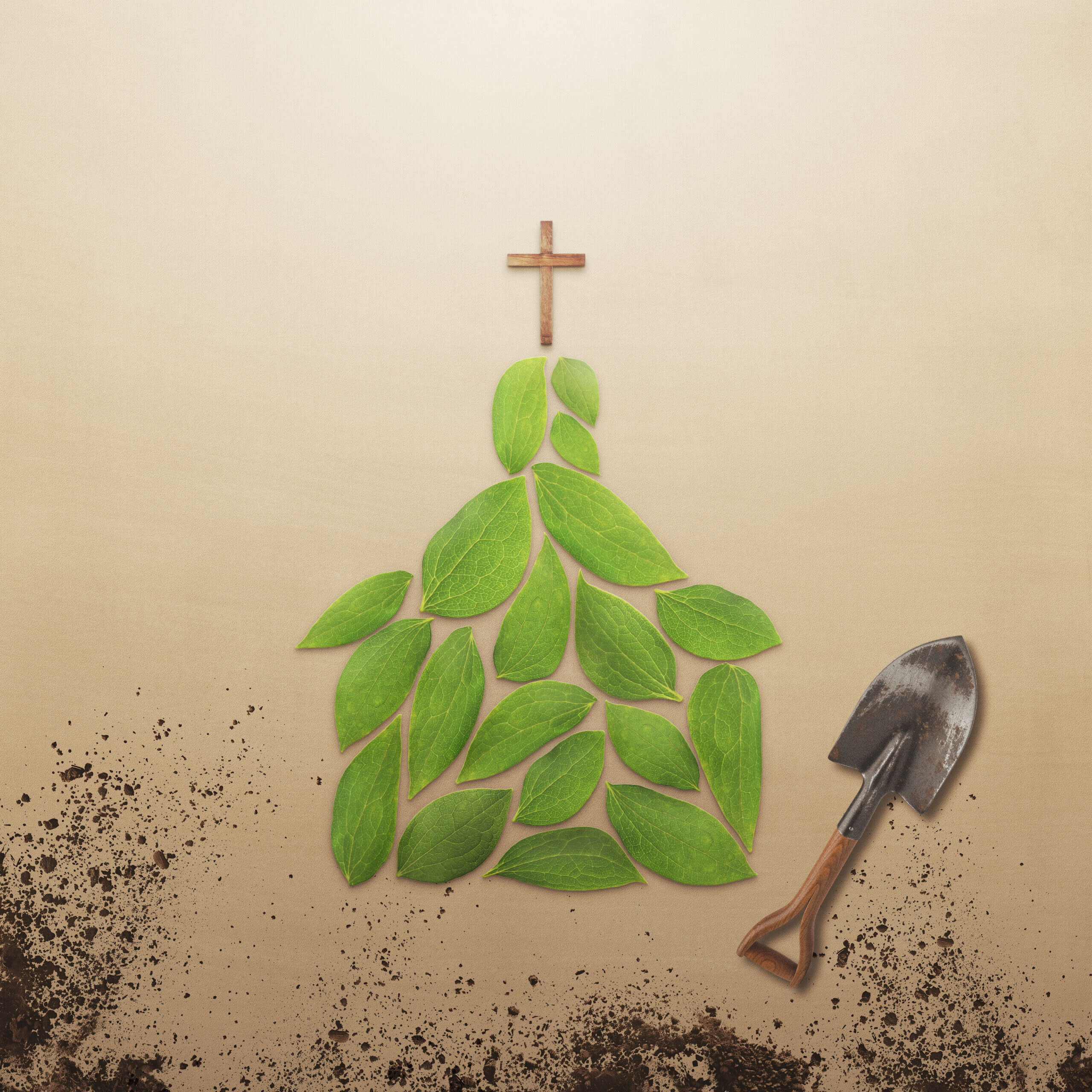
    How Does Church Planting Relate to Discipleship?

    When I was young, my father told me, “Nick, throughout your life you will hear unbelievers in North America saying disparaging things like, ‘There are too many churches everywhere,’ or ‘There’s a church on every corner’—when, in fact, they do not attend any church on any corner.” To this, he added, “There will always be a need for God’s people to plant more biblically solid churches.” He elaborated, “There are many so-called ‘churches,’ but there are never many biblically faithful churches. God would be glorified if His people planted doctrinally solid churches on every corner of every city in every country of the world!” I didn’t understand how profoundly important that sentiment was at the time. However, having planted a church and having helped with training church planters over the years, I have come to embrace my father’s conviction about the need for church planting.
    I love church planting because God is glorified when the redeemed gather together to worship Him in Spirit and in truth in faithful congregations across the face of the earth. I also love church planting because it is one of the principal ways in which the church faithfully carries out the Great Commission. The mission of the church is the discipling of God’s people among the nations (Matt. 28:18–20). God’s people are best discipled in the context of the local church. When there is no biblically sound local church in a particular locale, a church plant is needed for the purpose of lifelong discipleship.
    Prior to His ascension, Jesus told His disciples: Go therefore and make disciples of all nations, baptizing them in the name of the Father and of the Son and of the Holy Spirit, teaching them to observe all that I have commanded you. And behold, I am with you always, to the end of the age. (Matt. 28:19–20)
    The great Discipler charged His disciples to make disciples. How would they accomplish this? Simply put, through the work of evangelism leading to church planting and, from there, to organized churches. This is exemplified by the Apostolic commitments recorded in the book of Acts.
    The Apostles didn’t simply engage in evangelistic preaching in the village greens of the cities they entered. They set in place what was necessary to ensure disciple-making and disciple-building in specific geographical regions. In short, Jesus’ charge of disciple-making is best fulfilled through the establishment of biblically faithful churches on every corner of every city in every country throughout the world. We find a key example of this in the account of Paul and Barnabas in the region of Lystra, Iconium, and Antioch in Acts 14:21–22: When they had preached the gospel to that city and had made many disciples, they returned to Lystra and to Iconium and to Antioch, strengthening the souls of the disciples, encouraging them to continue in the faith, and saying that through many tribulations we must enter the kingdom of God. And when they had appointed elders for them in every church, with prayer

    Nick Batzig

We use several internet technologies to customize your experience with our ministry in order to serve you better. To learn more, view our Privacy Policy.