1. Guide

    The Reformation

    The Protestant Reformation of the sixteenth century—the beginnings of which are usually associated with the work of Martin Luther (1483–1546)—was really a collection of reformations across Europe. Various reformations of the church, theology, public worship, and even the broader society took place in nations including Germany, Switzerland, the Netherlands, Scotland, and England. Originally intended to reform the Western church from within, the Reformation led to a self-conscious effort to abandon the trappings of Roman Catholicism so that a true church might continue, since the Roman Catholic church had rejected vital theological reforms. Today, the theological principles of the Reformation may be summarized by the five solas—namely, that sinners are saved by grace alone, through faith alone, in Christ alone, under the authority of God’s Word alone, and all to the glory of God alone.

    Church History
  2. 10 messages

    Luther and the Reformation

    Centuries after his death, Martin Luther is celebrated as an intellectual giant, a brave opponent of corruption, a shaper of culture, indeed, as one of the most significant figures in Western history. Many people, however, are unaware of the events of Luther's life that led him to make a courageous stand for the gospel in the sixteenth century. In this series, R.C. Sproul provides a thorough introduction to the life and thought of Martin Luther. With an eye to the lessons we can learn today, R.C. Sproul traces the major events of Luther's life and explores the gospel recovered by Luther and the other Protestant Reformers.

    R.C. Sproul
  3. 2 messages

    The Making of the Protestant Reformation

    The division of the church that occurred during the Protestant Reformation was not something that the Reformers originally intended to happen. However, when it became clear that the church authorities would be unwilling to submit themselves to the teaching of sacred Scripture, Martin Luther knew that it was necessary to stand against them for the sake of the Gospel.
    In this series, Dr. R.C. Sproul explores the historical background of the Protestant Reformation. He looks at the life of Martin Luther and the teachings of the medieval church in order to remind us of the truth of the biblical Gospel and the reasons why we must tenaciously cling to it.

    R.C. Sproul
  4. 8 messages

    Reformation Truths

    Many people today dismiss the Reformation as a peculiar chapter of history with little relevance to contemporary life. However, nothing could be further from the truth. In this eight-part teaching series, Dr. Michael Reeves examines the ideas that lay at the heart of the Reformation. Surveying the writings of the brightest Roman Catholic and Protestant scholars of the era, Dr. Reeves reveals the stark contrast between the traditions’ very different interpretations of the gospel. By studying the central truths of the Reformation, Christians today can better understand, rejoice in, and proclaim the good news of Jesus Christ.

    Michael Reeves
  5. 12 messages

    The English Reformation and the Puritans

    Their Unlikely Story is Ours
    Few stories contain heroism, betrayal, ricocheting monarchs, bold stands against repressive authorities, and redemption like this one. And fewer generations have modeled commitment to the gospel and the application of God's Word like the Puritans of England. In this 12-part series, Dr. Michael Reeves surveys Puritan theology and the work of the Holy Spirit when the Reformation flourished in England. Major milestones of this movement underscore the Puritan's special place in history, as they displayed spiritual wisdom and discernment still benefiting pulpits and believers today.

    Michael Reeves
  6. 7 messages

    Reformation Profiles

    People new to Reformed theology may wonder just what it was about a five-hundred-year-old historical movement that affects our thinking so much today. So join Dr. Stephen Nichols for an inviting, approachable take on "Reformation 101," as he explores the events of the Protestant Reformation from the perspective of important figures from each of four key countries in this new seven-part teaching series. More than a history lesson, Dr. Nichols helps believers understand why the Reformation mattered then and matters now.

    Stephen Nichols
  7. Reformation Truths

    Many people dismiss the Reformation as a peculiar chapter of history with little relevance to contemporary life. But nothing could be further from the truth. In this eight-part teaching series, Dr. Michael Reeves explains that the Reformation still matters because the gospel still matters. As he surveys the beliefs of Roman Catholics and Protestants, we see that these two traditions hold two very different views on salvation. One relies on our performance; the other rests on Jesus' righteousness alone. Only one is the true gospel, and like the Reformers, we must proclaim it with clarity, boldness, and joy.

    Michael Reeves
    $15.00$12.00
  8. Reformation Profiles

    People new to Reformed theology may wonder just what it was about a five-hundred-year-old historical movement that affects our thinking so much today. So join Dr. Stephen Nichols for an inviting, approachable take on "Reformation 101," as he explores the events of the Protestant Reformation from the perspective of important figures from each of four key countries in this seven-part teaching series. More than a history lesson, Dr. Nichols helps believers understand why the Reformation mattered then and matters now.

    Stephen Nichols
    $10.00$8.00
  9. 7 min

    What Was the Cause of the Protestant Reformation?

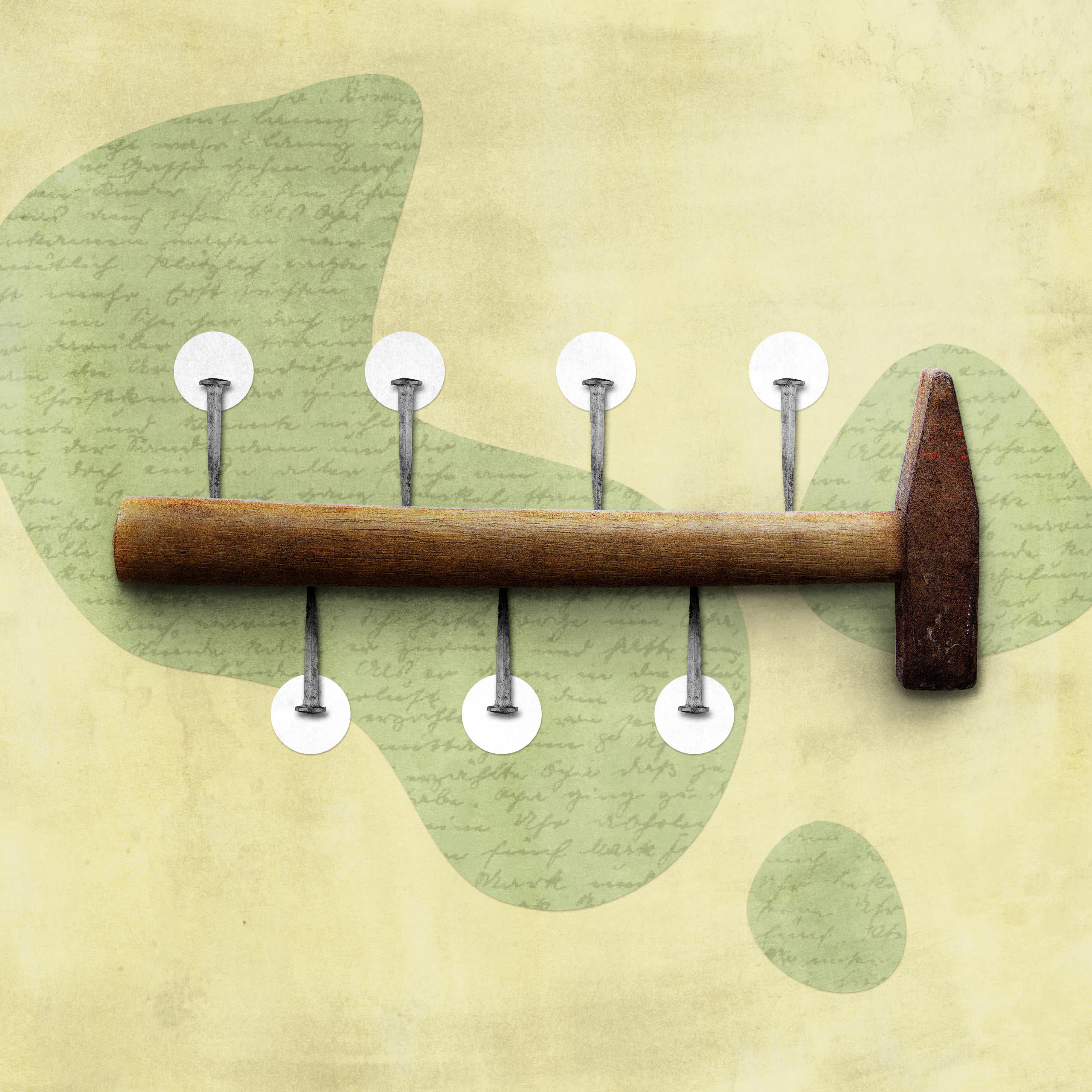
    begins with baptism. Baptism is called the instrumental cause of justification. We earlier mentioned the distinctions that Aristotle made between different types of causes, and to illustrate these distinctions he talked about sculpting a statue. The material cause of the statue is the stone out of which the statue is made. The efficient cause is the sculptor. The instrumental cause is the chisel and the hammer, the tools that the sculptor uses. According to the Roman Catholic Church, the tool or instrument that God uses to bring justification to sinners is baptism. The person who is baptized receives an infusion of justifying grace, or the grace of the righteousness of Christ. That is, in baptism, something happens inwardly—the soul is infused with divine grace. If the person who is baptized cooperates with that infused or poured-in grace in baptism and assents to it, then he is in a state of justification.
    In the Roman Catholic system, justification does not necessarily endure forever, however. A baptized and justified person will remain in the state of justification until or unless he commits a mortal sin. A mortal sin is so called because it kills the grace that is poured into the soul at baptism. The person who commits a mortal sin must then be justified again—but not through baptism. Justification is restored through the sacrament of penance. This sacrament is defined by the Roman Catholic Church as the second plank of justification for those who have made shipwreck of their souls. The first plank is baptism, and the second plank is penance.
    According to the Roman Catholic Church, then, justification is acquired instrumentally through the sacraments. The Reformers responded that the instrumental cause of our justification is not baptism or penance; it is faith in Christ. Faith and faith alone is the tool or instrument that links us to Christ and all that He has done for us and by which we are made just in the sight of God.

    R.C. Sproul
  10. 4 min

    How the Reformation Spread

    an Augustinian monk from Cambridge who was burned at the stake in 1540. Seven years before his martyrdom, he had matriculated at the University of Wittenberg. There also was Martin Bucer, an important Reformer who was invited by the English Protestants to come to Britain and become a professor at the University of Cambridge in 1551.
    In addition to those who influenced the English Reformation directly from Luther’s Germany, were those whose influence came by a more circuitous route, that is, via Geneva, Switzerland. John Calvin himself had to flee from Paris because of the views he learned from his friends who had been influenced by the teachings of Martin Luther. This Frenchman found his refuge in Geneva, where his pulpit and teaching ministry became known around the world. Geneva became a city of refuge for exiles who fled there for safety from all over Europe. Of the countries that sent exiles to Calvin’s Geneva, none was more important than England and the British Isles. John Knox, who led the Reformation in Scotland, spent some time in Switzerland at the feet of Calvin, learning his Reformation theology there. Though Calvin was twenty-six years younger than Luther, Luther’s views made a dramatic impact on the young Calvin’s life while he was still in his twenties. Though Calvin is usually associated with the doctrine of predestination, it is often overlooked that there was nothing in Calvin’s view of predestination and election that was not first articulated by Luther, especially in Luther’s famous work The Bondage of the Will.
    When Calvin was teaching in Geneva, Bloody Mary came to the throne of England. Under her reign, many Protestants were burned at the stake. Those who survived the stake fled in large numbers to Geneva. Some of the exiles from England under Calvin’s tutelage set upon the task of translating the Bible into English. This Bible, called the Geneva Bible, was the first Bible to have theological notes printed in the margin, which notes were heavily influenced by Calvin’s preaching. This Bible was the predominant Bible among the English for the next hundred years before it was supplanted by the popular King James Version. It was the original, official version of the Scottish Presbyterian Church. It was the Bible of Shakespeare, the Bible the Pilgrims brought with them on the Mayflower to America, and it was the Bible of choice among America’s early colonists.
    From Wittenberg directly to England, or from Wittenberg to Geneva to England, in this roundabout route, the seeds of the Reformation that were planted in Germany sprouted into full bloom as they made their way into the English empire. To trace the pathway from Wittenberg to London, one must follow a series of circuitous routes, but the origin of that movement in Wittenberg is unmistakable, and its influence continues even to this day.

    R.C. Sproul
  11. 7 min

    Calvin’s Defining Passion in the Protestant Reformation

    enjoyment or entertainment. It’s not evangelism or fellowship either. It is the worship of God. In fact, the whole goal of salvation is to bring people to a place where they worship God and honor Him as God.
    The Cambridge Declaration goes on to state, “We reaffirm that because salvation is of God, has been accomplished by God, is for God’s glory that we must glorify Him always, we must live our entire lives before the face of God, under the authority of God, and for the glory of God alone.” In everything we do, we are to give honor and ascribe glory to Him. The declaration goes on, “We deny that we can properly glorify God if our worship is confused with entertainment; if we neglect God’s law or the gospel in our preaching; or if self-improvement, self-esteem, or self-fulfillment are allowed to become alternatives to the gospel.”
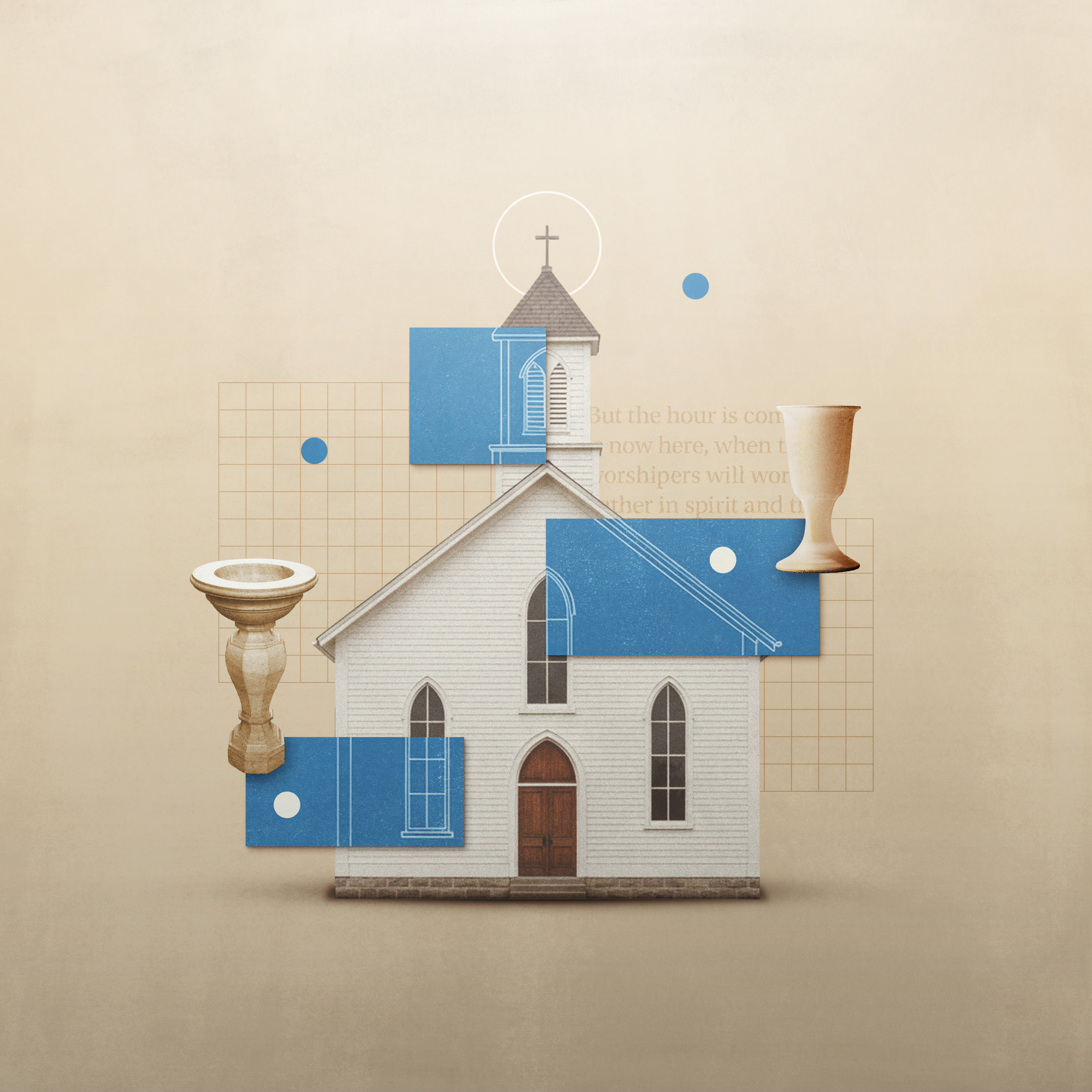
    Our worship services must be carefully constructed because we do not worship alone. When we come to worship on Sunday morning, we are entering the heavenly sanctuary; we’re involved in the communion of saints where God is present, Christ is present, and the spirits of the righteous made perfect are present. Our worship services are not just for us, and the great danger in our day is that we make ourselves the center of concern and we steal the glory of God. In salvation, in worship, in all that we do, the driving passion of the Christian must always be soli Deo gloria, to God alone be the glory.

    R.C. Sproul
  12. 5 min

    The Very Heart of the Reformation

    how glorious is the good news of the gospel. The good news is simply this: I can be reconciled to God. I can be justified, not on the basis of what I do, but on the basis of what has been accomplished for me by Christ.
    Of course, Protestantism really teaches a double imputation. Our sin is imputed to Jesus and His righteousness is imputed to us. In this twofold transaction, we see that God does not compromise His integrity in providing salvation for His people. Rather, He punishes sin fully after it has been imputed to Jesus. This is why He is able to be both “just and the justifier of the one who has faith in Jesus,” as Paul writes in Romans 3:26. So, my sin goes to Jesus and His righteousness comes to me. This is a truth worth dividing the church. This is the article on which the church stands or falls, because it is the article on which we all stand or fall.
    It is strange to me that Rome reacted so negatively to the idea of imputation, because in its own doctrine of the atonement, it holds that our sins are imputed to Jesus on the cross, which is why His atoning death has value for us. The principle of imputation is there. Furthermore, Rome teaches that a sinner can receive indulgences through the transfer of merit from the treasury of merit, but this transfer cannot be accomplished except by imputation.
    The Roman Catholic Church declared that the Reformation view of justification involves God in a “legal fiction” that undermines His integrity. Rome was asking how God, in His perfect righteousness and holiness, can declare a sinner to be just if he is not, in fact, just. That seems to involve God in a fictional declaration. The Protestant response was that God declares people just because He imputes the real righteousness of Christ to them. There is nothing fictional about Christ’s righteousness, and there is nothing fictional about God’s gracious imputation of that righteousness.

    R.C. Sproul
  13. 5 min

    Fueling Reformation

    Bible.
    So it should go without saying that the most important development that will bring about reformation is not simply the revival of Calvinism. What has to happen is the renewal of the understanding of the gospel itself. It is when the gospel is clearly proclaimed in all of its fullness that God exercises His redeeming power to bring about renewal in the church and in the world. It is in the gospel and nowhere else that God has given His power unto salvation.
    If we want reformation, we have to start with ourselves. We have to start bringing the gospel itself out of darkness, so that the motto of every reformation becomes post tenebras lux—“after darkness, light.” Luther declared that every generation must declare freshly the gospel of the New Testament. He also said that anytime the gospel is clearly and boldly proclaimed, it will bring about conflict, and those of us who are inherently adverse to conflict will find it tempting to submerge the gospel, dilute the gospel, or obscure the gospel in order to avoid conflict. We, of course, are able to add offense to the gospel by our own ill-mannered attempts to proclaim it. But there is no way to remove the offense that is inherent to the gospel message, because it is a stumbling block, a scandal to a fallen world. It will inevitably bring conflict. If we want reformation, we must be prepared to endure such conflict to the glory of God.

    R.C. Sproul
  14. 1 min

    Did anyone believe in justification by faith alone before the Reformation?

    One of the classic works on this question was written by a man by the name of James Buchanan. It was simply titled Justification, which addressed the chief issue of the Protestant Reformation of the sixteenth century. One of the great values of Buchanan’s contribution is that he traced the doctrine of justification by faith alone through the patristic period and all the way through church history, showing that it was never totally extinguished within the Roman system that had radically departed from the biblical doctrine. So, that information is available.
    This is a critical matter. I wrote a book recently titled Are We Together? We’re not. Rome has never changed her view of the condemnation of the gospel of justification by faith alone that occurred at the sixth session of the Council of Trent in the sixteenth century. That condemnation was repeated as recently as the Catholic Catechism in the 1990s.
    In the Tridentine view of the sixteenth century, not only were there canons against the Protestant view, but the beginning part of the session carefully articulated the Roman understanding of justification, or what we would call the Roman understanding of the gospel. If you compare Trent’s understanding of the gospel with the Reformation understanding of the gospel, you have to see that they cannot both be right. One of them has to be a false gospel, and only one of them can be the true gospel. That’s what the issue was then, and that issue continues even now.

    R.C. Sproul
  15. 1 min

    How should we respond to those who say that the Reformation no longer matters?

    SPROUL: One noted British theologian has made the comment in print that the issues of the sixteenth century aren’t the issues anymore today, that all of a sudden the division has been healed, that Rome doesn’t teach indulgences anymore, and that it doesn’t have a treasury merit anymore.
    What are they thinking? What are they reading? Read the Catholic Catechism of the 1990s and see whether there’s any treasury of merit, indulgences, and the rest.
    If anything, the issues are greater today, partly because of the impact of nineteenth-century liberal Protestantism. If anything has moved the gospel back in the darkness, it’s that. And that heresy came out of Protestantism, not out of the Roman Catholic Church, yet we are being destroyed in the worldwide sense by the residual unbelief of the nineteenth-century liberal destruction of the gospel.
    NICHOLS: When I hear these kinds of questions, “Was the Reformation a mistake? Is the Reformation over?” they tend to be framed from those in Anglo-American contexts. It’s very interesting that if you go into Latin-American contexts, like Brazil, they’re not asking the question, “Is the Reformation over?” There is a very clear distinction between what Roman Catholicism is teaching and Protestantism.
    We are partners with a wonderful ministry in Brazil called Editora Fiel. When the founder of that ministry went to Brazil and began the ministry, the local Catholic church hung a banner outside of their church praying to Our Lady of Fátima (meaning Mary), “Deliver us from the heresies of these Protestants.”
    Sometimes in our settings, I think because of generations of liberalism, we become theologically numb. When we put ourselves out of our settings, we see how much of a distinct, clear, and true difference there is between Protestantism, which is upholding the gospel, and Catholicism, which really is obscuring the gospel.

  16. 2 min

    Forerunner of the Reformation

    John Wycliffe was the morning star of the Reformation. He was a protestant and a reformer more than a century before Martin Luther ignited the Protestant Reformation in 1517. Through Wycliffe, God planted the seeds of the Reformation, He watered the seeds through John Hus, and He brought the flower of the Reformation to bloom through Martin Luther. The seed of the flower of the German Augustinian monk Luther’s 95 theses was planted by the English scholar and churchman John Wycliffe.
    Wycliffe died on New Year’s Eve, 1384. Three decades later, he was condemned as a heretic. In 1415, the Council of Constance condemned the Bohemian reformer John Hus (c. 1370-1415) and burned him at the stake, and it condemned Wycliffe on 260 counts of heresy. The council ordered that Wycliffe’s bones be exhumed, removed from the honored burial grounds of the church, and burned, and his ashes scattered. More than a decade later, the Roman Catholic Church sought to counteract the spreading heresies of Wycliffe and his followers, the Lollards, by establishing Lincoln College, Oxford, under the leadership of Bishop Richard Fleming. Although the pope could condemn Wycliffe’s teachings and scatter his bones, he was unable to stamp out his influence. Wycliffe’s ashes were scattered into the River Swift in England’s Midlands, and as one journalist later observed: They burnt his bones to ashes and cast them into the Swift, a neighboring brook running hard by. Thus the brook hath conveyed his ashes into Avon; Avon into Severn; Severn into the narrow seas; and they into the main ocean. And thus the ashes of Wycliffe are the emblem of his doctrine which now is dispersed the world over.
    Wycliffe was committed to the authority and inspiration of Holy Scripture, declaring, Holy Scripture is the highest authority for every believer, the standard of faith and the foundation for reform in religious, political and social life . . . in itself it is perfectly sufficient for salvation, without the addition of customs or traditions.
    As such, Wycliffe oversaw the translation of the Bible from Latin into the English vernacular. This was a radical undertaking, and it was against the express mandate of the papacy. His understanding of Scripture naturally led to his understanding of justification by faith alone, as he declared, “Trust wholly in Christ. Rely altogether on his sufferings. Beware of seeking to be justified in any other way than by his righteousness. Faith in our Lord Jesus Christ is sufficient for salvation.”
    In the fourteenth century, at the dawn of the Reformation, Wycliffe shone as a burning and shining light of gospel truth, and his doctrine mirrored his life as one who lived by God’s grace and before God’s face, coram Deo, and for God’s glory. Soli Deo gloria.

    Burk Parsons
  17. 2 min

    True Reformation

    Awakening is at the very heart of the Christian faith, and it is the reason we are Christians. Awakening is the powerful work of our sovereign and gracious God. When He awakens us, He doesn’t simply awaken us from sleep, but from death. Awakening is the glorious work of regeneration, revival, and reformation. When God awakens us, He regenerates our hearts, gives us the gift of new birth, and makes us alive. He says to us, “Live!” (Ezek. 16:6). The Holy Spirit invades, conquers, and persuades us. He rips out our stubborn, self-trusting hearts of stone and replaces our dead hearts with new, living hearts—hearts that are made willing and able to believe; hearts that are soft and pliable in the hands of our Father, united and lovingly enslaved to Christ, and indwelt by the Holy Spirit.
    When God awakens, He always brings revival, whether it is the revival of a single soul, the revival of a family, the revival of a community, or the revival of a nation. When God brings revival, He always brings deep and convicting repentance that leads to a life of faith, repentance, and obedience. When God awakens, He always brings true and lasting reformation—reformation of hearts, lives, homes, and churches. However, we cannot schedule awakening, and we should not attempt to devise a superficial, formulaic scheme to bring about awakening. D. Martyn Lloyd-Jones said, “A revival never needs to be advertised; it always advertises itself.” Awakening happens only when God ordains it. He brings about awakening according to His sovereign plan. He brings about awakening where He wants, when He wants, and to whom He wants, all according to His good pleasure.
    Nevertheless, just as God ordains awakening, He ordains the means of awakening. God not only sovereignly ordains the ends of all things, He ordains the means of all ends as well. And the means that God has ordained to bring about awakening are the ordinary means He has already ordained for our regular weekly worship and daily growth in grace. The Word, prayer, and the sacraments of baptism and the Lord’s Supper are the ordinary means of grace God has given us. These are the means through which the Holy Spirit works to bring true conversion, true revival, and true reformation. God’s awakening power is not activated by our schemes and tactics, but by His Spirit and His ordinary means of awakening. And we must trust Him to do precisely what He pleases to do according to His sovereign wisdom, resting in the promise that the light of His countenance shines upon us as we live before His face, coram Deo.

    Burk Parsons
  18. 3 min

    Why Was the Reformation Necessary?

    be conducted by God’s standards. Our worship shows whether we truly accept God’s Word as our authority and submit to it. Self-created worship is both a form of works-righteousness and an expression of idolatry.
    Next, Calvin turned to what we often think of as the greatest issue of the Reformation, namely, the doctrine of justification: We maintain, that of what description so ever any man’s works may be, he is regarded as righteous before God, simply on the footing of gratuitous mercy; because God, without any respect to works, freely adopts him in Christ, by imputing the righteousness of Christ to him, as if it were his own. This we call the righteousness of faith, viz., when a man, made void and empty of all confidence of works, feels convinced that the only ground of his acceptance with God is a righteousness which is wanting to himself, and is borrowed from Christ. The point on which the world always goes astray, (for this error has prevailed in almost every age,) is in imagining that man, however partially defective he may be, still in some degree merits the favor of God by works.
    These foundational matters that form the soul of the church are supported by the body of the church: the sacraments and the government of the church. The sacraments must be restored to the pure and simple meaning and use given in the Bible. The government of the church must reject all tyranny that binds the consciences of Christians contrary to the Word of God.
    As we look at the church in our day, we may well conclude that reformation is needed—indeed, is necessary—in many of the areas about which Calvin was so concerned. Only the Word and Spirit of God will ultimately reform the church. But we should pray and work faithfully that such reform will come in our time.

    W. Robert Godfrey
  19. 2 min

    The Dawn of Reformation

    It is one thing to believe that the Bible is the Word of God, but it is another to believe, or trust, the Bible as the Word of God. We’re called not only to believe in God and His Word but to believe God—to trust God—and His Word. Throughout history, the visible church has always professed her belief that the Bible is God’s Word. Yet, a cursory study of church history reveals that many popes, priests, and parishioners neglected to read the Bible themselves, and many didn’t believe, or trust, the Bible as the final, authoritative Word of God.
    Such widespread unbelief didn’t happen all at once, but gradually. As men gained political and ecclesiastical power throughout the medieval period, they established themselves as the only authoritative interpreters of God’s Word and, eventually, albeit inevitably, as authoritative equals with God’s Word. As a result, God’s Word was deemed superfluous, chained to the pulpit, and recited solely in Latin, ensuring that common, uneducated (poor and powerless) Christians could never access God’s Word for themselves and, therefore, never question the authority of the powerful elite. Nevertheless, men cannot silence God’s Word, nor can they contain the Holy Spirit or extinguish the power of the gospel. God’s truth will always shine, however dark the age.
    The light of the sixteenth-century Reformation was the reflection of the light of the Word of God as our final, infallible authority. The great Reformation slogan, post tenebras, lux (after darkness, light), captured the heart of the Reformation—the light of God’s Word and the light of the gospel of Jesus Christ, who is the light of the world. This light of the gospel that shone brilliantly in Wittenberg and Geneva and throughout Europe in the sixteenth century had been steadily shining throughout all of history through the faithful remnant of those whom God had raised up to proclaim His Word and His gospel to His people.
    We can trace the dawn of the Reformation back through the centuries, from John Hus in the fifteenth century to John Wycliffe in the fourteenth century to Peter Waldo in the twelfth century. Waldo preached the authority of Scripture and worked diligently for a common translation of the Bible and its use among all people; for the ability of all Christians, not just the clergy, to teach the gospel to their children; and for the right of all men to obey God and His Word as their final, infallible authority for all of faith and life. By God’s grace, he strove to live all of life coram Deo, looking to God’s Word as the lamp to his feet and the light to his path, a path that led to excommunication but, eventually, to reformation.

    Burk Parsons
  20. 3 min

    What is the difference between reformation and revival?

    even hundreds of thousands of people converted during the Reformation period. I wonder if anyone has ever done statistics about the number of people who seem to have been genuinely converted from 1520 to 1550. The actual obedience to what God commands us to do with respect to the life of the church gained great prominence in the sixteenth century, even more than in the eighteenth or nineteenth centuries.
    GODFREY: You can think of that in terms of Geneva having preaching every morning in the church. Presumably, somebody was there—even Reformed ministers don’t preach to an empty building. There was an eagerness for the Word of God such that people were coming every morning to hear sermons. That’s an eagerness for the Word that represents a changed heart, not just changed externals.
    FERGUSON: At one point, they had to move Calvin’s Old Testament lectures into the church because so many people wanted to hear him lecture on the Old Testament—that’s quite something.

  21. 3 min

    The Necessity of the Reformation

    be conducted by God’s standards. Our worship shows whether we truly accept God’s Word as our authority and submit to it. Self-created worship is both a form of works-righteousness and an expression of idolatry.
    Next, Calvin turned to what we often think of as the greatest issue of the Reformation, namely, the doctrine of justification: We maintain, that of what description so ever any man’s works may be, he is regarded as righteous before God, simply on the footing of gratuitous mercy; because God, without any respect to works, freely adopts him in Christ, by imputing the righteousness of Christ to him, as if it were his own. This we call the righteousness of faith, viz., when a man, made void and empty of all confidence of works, feels convinced that the only ground of his acceptance with God is a righteousness which is wanting to himself, and is borrowed from Christ. The point on which the world always goes astray, (for this error has prevailed in almost every age,) is in imagining that man, however partially defective he may be, still in some degree merits the favor of God by works.
    These foundational matters that form the soul of the church are supported by the body of the church: the sacraments and the government of the church. The sacraments must be restored to the pure and simple meaning and use given in the Bible. The government of the church must reject all tyranny that binds the consciences of Christians contrary to the Word of God.
    As we look at the church in our day, we may well conclude that reformation is needed—indeed, is necessary—in many of the areas about which Calvin was so concerned. Only the Word and Spirit of God will ultimately reform the church. But we should pray and work faithfully that such reform will come in our time.

    W. Robert Godfrey
  22. 1 min

    What can the “Young, Restless, and Reformed” movement learn from the historic Reformation?

    That’s a big question, and there’s a great complexity to the answer. One thing we need to always keep in mind is that truth is never a fad. When God’s truth goes out, it never returns void. It always goes forth and accomplishes precisely what God has intended.
    We need to be grateful for God’s truth going forth to the young, to the aged—to all. We need to contend for that truth, continue to proclaim that truth, and be grateful for the truth of the Lord going forth. We need to be faithful in cultivating that truth and discipling the young, not simply giving them the truth and then letting them run off on their own. Rather, we need to mentor them and come alongside them.
    Older men need to come and mentor younger men, and older women in the churches need to come and mentor younger women. We need to help them grow as disciples of Jesus Christ so that they might not simply have a flash in a pan with Reformed theology in the Bible, but rather that they might come to learn how to love the Bible, how to love the Lord Jesus Christ, how to grow in the Lord Jesus Christ, and how to grow into maturity in the church of Jesus Christ.
    We should not divorce young people—or anyone for that matter—from the church. Rather, we as God’s people in all the church should be examples to the young. We should be examples in our faith and examples in our worship. We need to be coming to worship and attending worship, attending to the means of grace.
    That will be the example to the younger generations as they see us living out the gospel in our own lives.

    Burk Parsons

We use several internet technologies to customize your experience with our ministry in order to serve you better. To learn more, view our Privacy Policy.